
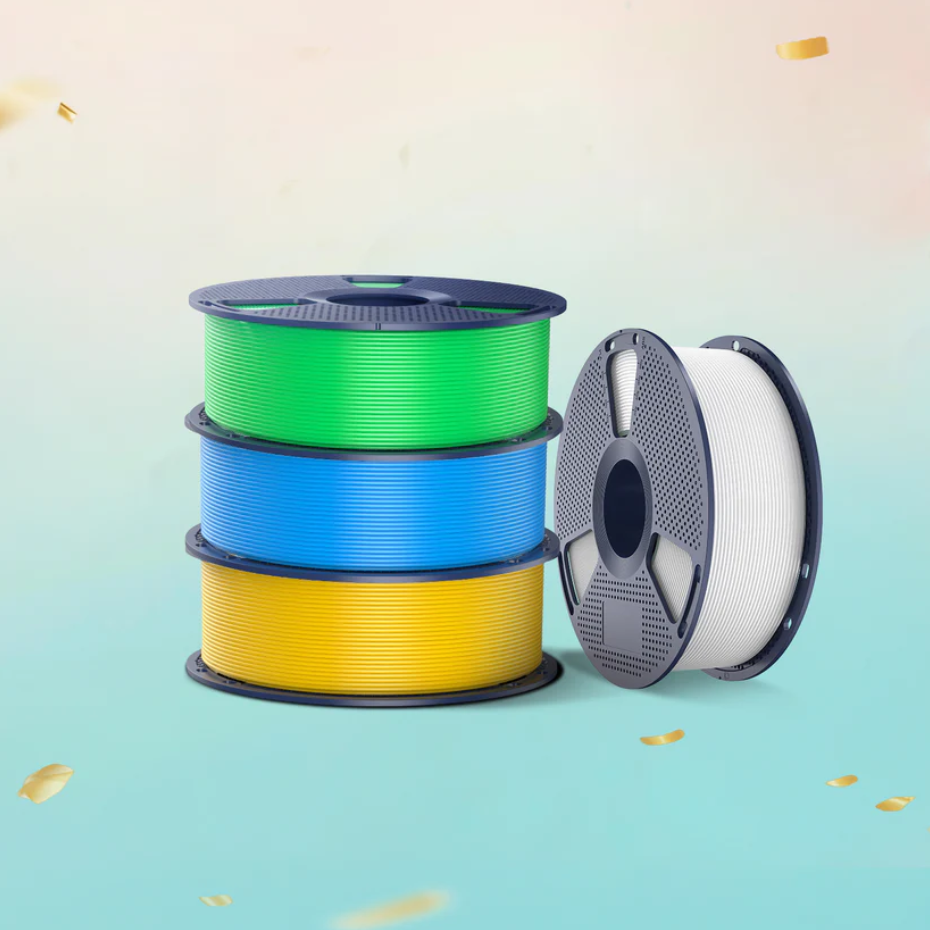
Choosing a suitable material is an important step for companies using 3D printing in product development, prototyping, and small-batch manufacturing. PLA, PETG, and ABS are three common materials, but they have different printing characteristics and application requirements. The right choice depends on factors such as part function, printing environment, and expected performance. SUNLU provides 3D printing materials for different application needs, including PLA materials designed for easy operation and stable printing. Understanding the differences between these materials helps businesses make more suitable decisions.
Comparing the Strengths of PLA, PETG, and ABS for Daily Printing Projects
PLA is widely used because of its simple printing process and stable performance. It is often selected for prototypes, concept models, educational projects, and general-purpose parts. Compared with some engineering materials, PLA usually requires fewer adjustments during printing, making it suitable for users who value convenience and efficiency.
PLA Filaments are known for their low shrinkage characteristics, which can help reduce problems such as cracking and warping during printing. They are also considered an option for users who want materials with more environmentally friendly features. However, PLA has lower heat resistance than PETG and ABS, so it may not fit applications exposed to high temperatures.
PETG is commonly chosen when projects require a balance between strength and printing convenience. It provides better impact resistance than standard PLA and is suitable for functional prototypes, protective parts, and components that need more durability. PETG can be a practical choice for businesses that need printed parts with improved mechanical performance.
ABS is another commonly used material, especially in engineering-related applications. It offers good toughness and heat resistance, which makes it suitable for parts that may experience mechanical stress or higher temperatures. However, ABS usually requires more attention to printing conditions because temperature changes can influence printing results.
How 3D Printing Filament Selection Affects Material Performance
Choosing the right 3D printing filament requires understanding the working environment of the final product. A material used for appearance models may have different requirements from a part used in functional testing. Businesses should consider strength, temperature resistance, surface quality, and printing conditions before selecting a material.
For example, PLA can be suitable for companies that need fast prototyping and clear visual results. PETG may be more suitable when durability is important. ABS can support applications where stronger resistance is needed. The choice should match the actual purpose of the printed part instead of only focusing on material popularity.
When developing materials for different users, SUNLU focuses on providing filament solutions with stable printing characteristics. Their PLA 3D Printer Filament 1KG is designed with easy printing and high compatibility features. The product uses a diameter of 1.75 ± 0.02 mm and is suitable for different printing projects that require consistent material feeding.
Printing Conditions of a Filament 3D Printer Using PLA Materials
A filament 3D printer needs suitable temperature settings to achieve stable printing results. SUNLU PLA 3D Printer Filament 1KG supports printing temperatures of 200–210°C when printing at 50–100 mm/s. For higher printing speeds of 100–200 mm/s, the recommended temperature range is 210–240°C.
Bed temperature also influences the connection between the printed object and the platform. When using an unheated bed, glue is required for better adhesion. When the heated bed reaches 50–60°C, glue is not needed. These details help users understand how machine settings affect the final quality of printed parts.
Proper storage is also important for maintaining material performance. 3D printing materials should be stored in a cool and dry place. Under suitable storage conditions, the general shelf life of these materials is around 1.5 to 2 years. Good storage habits can help maintain material quality before production use.
Choosing Between PLA PETG and ABS for Business Applications
Material selection should be based on project requirements. PLA is suitable for businesses that need simple operation and efficient prototyping. PETG can be considered for projects requiring better durability. ABS may fit applications where toughness and heat resistance are more important factors.
The performance of a 3D printing filament also depends on equipment compatibility and printing management. Different machines may require adjustments in temperature and speed settings. Companies should evaluate the complete printing process, including material handling and production goals.
For businesses looking at sustainable production methods, material properties are also worth considering. PLA materials are known for their biodegradable characteristics within 6 to 12 months under specialized industrial conditions (58°C+ and high humidity), while specialized recycling streams can support more responsible material management. These factors provide additional considerations during material selection.
Making a Practical Decision for Different 3D Printing Needs
PLA, PETG, and ABS each have different advantages. PLA focuses on easy printing and stable operation, PETG provides a balance between strength and flexibility, while ABS supports applications requiring higher toughness and heat resistance. Understanding these differences helps businesses choose materials based on actual project needs.
With experience in 3D printing materials, SUNLU offers PLA solutions that support various printing applications. Their products provide users with material options that consider printing compatibility and practical requirements. By evaluating application conditions, equipment settings, and expected results, companies can select more suitable materials for their workflows.
