
A busy restaurant kitchen may have several cooking stations running at the same time. Heat, limited workspace, cooking speed, and staff movement all affect how these stations are arranged. As induction technology enters more professional kitchens, it is changing some of these familiar conditions. A commercial induction cooker heats compatible cookware through electromagnetic induction, so the cooking process does not depend on an open flame.
This change has implications beyond the hob itself. Kitchen planners can reconsider heat management, equipment placement, cooking controls, and the types of appliances assigned to different dishes. Manufacturers such as Better Induction also develop induction products for different commercial cooking tasks, reflecting the wider range of applications now found in professional kitchens.
Heat Is Produced Differently at the Cooking Station
Gas cooking creates a flame beneath the cookware, and part of the generated heat reaches the surrounding environment. Induction works differently. The electromagnetic field interacts with compatible cookware, generating heat in the vessel itself.
For a busy kitchen, this difference can affect conditions around individual cooking stations. Cooks often work close to fryers, stock pots, woks, grills, and preparation counters for long periods. The amount and location of heat therefore matter when planners decide how these work areas should be arranged.
Induction does not remove the need for kitchen ventilation. Cooking still produces steam, grease, odors, and heat from food and cookware. Extraction requirements should be considered according to the cooking process, equipment, local regulations, and kitchen design.
Cooks Have More Direct Control Over Heat Settings
Commercial cooking involves frequent changes in heat. A sauce may need gentle heating, while another dish may require a higher setting for a shorter period. Equipment controls therefore influence how cooks manage these changes during service.
Many induction appliances allow users to select different power or temperature settings. Instead of controlling the size of a gas flame, staff make adjustments through the equipment interface. Depending on the model, this may involve buttons, touch controls, knobs, or a combination of control methods.
The interface deserves attention when equipment is selected. Kitchen staff may need to change settings repeatedly while handling several tasks. Controls should therefore be evaluated according to the actual cooking process rather than judged only by their appearance or number of functions.
Kitchen Layouts No Longer Depend on One Equipment Format
Induction cooking is available in more forms than a single countertop hob. Professional kitchens can use tabletop units, built-in models, drop-in appliances, floor-standing equipment, induction woks, fryers, warmers, buffet stations, and cooking islands.
This variety gives kitchen designers different ways to organize work areas. A small preparation station may use a countertop appliance. A hotel buffet may require equipment integrated into a serving counter. A restaurant focused on wok cooking may need a structure designed around that particular cooking method.
As a result, commercial induction cooking equipment should be selected according to the role of each station. Available space, menu, cookware, electrical supply, staff movement, cleaning access, and installation conditions can all influence the final equipment arrangement.
What Equipment Design Means During Daily Service
The practical effect of induction technology also depends on how each appliance is built. Two units based on the same heating principle may provide different control layouts, surface materials, body structures, and protection functions.
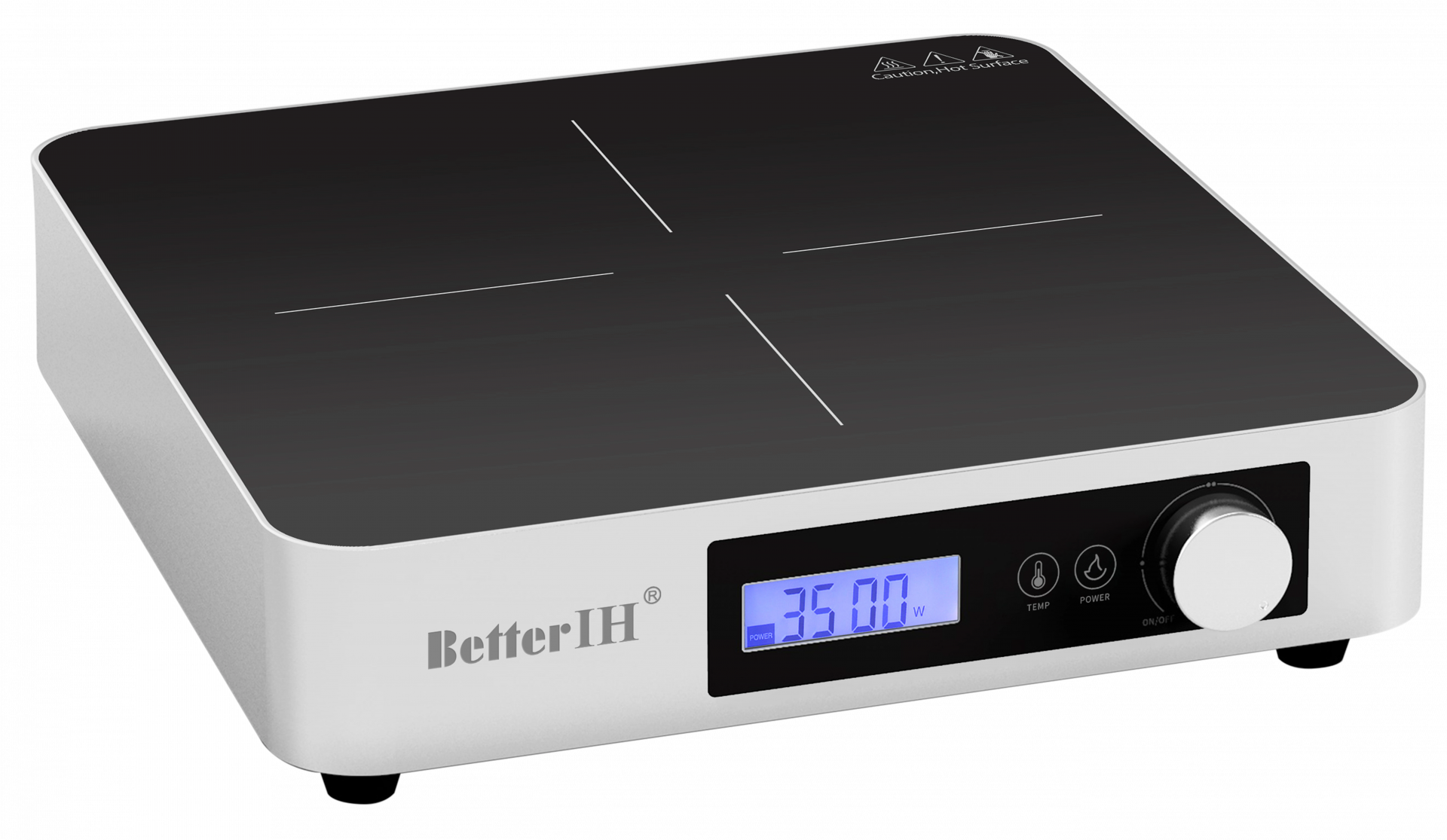
Better Induction’s E350S provides one example. It uses a stainless steel body and can be configured with a glass hob, Schott Ceran hob, or Eurokera France hob. The unit has touch control and an LCD display. Power or temperature can be adjusted with a knob, and electronic overheating protection is included.
These details are useful when comparing equipment because staff interact with the cooking surface and controls throughout service. Buyers can examine whether the control arrangement suits their workflow, how the unit will be positioned, and whether its construction matches the intended kitchen environment.
Menus Are Playing a Larger Role in Equipment Decisions
A professional kitchen should not select induction equipment only by product category. The dishes prepared at each station provide a more useful starting point.
A kitchen that frequently boils stock may have different requirements from one focused on stir-frying. Deep-fried food introduces another process, while buffet service requires equipment suited to serving and holding arrangements. Different tasks can therefore call for different induction formats.
When comparing a commercial induction cooker, buyers can identify cookware size and material, cooking method, available electrical conditions, installation space, required controls, and cleaning routines. Looking at these factors together makes it easier to connect the appliance with its intended station.
This also changes how complete cooking lines are planned. Instead of filling a kitchen with several identical units, designers can assign equipment according to individual functions and arrange the stations around the sequence of food preparation.
Different Kitchen Concepts Create New Product Requirements
Hotels, restaurant groups, catering businesses, and kitchen equipment brands do not always require the same appliance configuration. A product designed for a buffet counter may need a different structure from equipment intended for a back-of-house cooking line.
Such differences can create demand for changes in appearance, installation format, controls, functions, or internal structure. This is one reason ODM development is relevant to the growth of induction cooking in professional kitchens.
Better Induction has focused on induction cooking appliances since 1999 and provides ODM and OEM services covering design, R&D, and manufacturing. They offer induction products in different forms and for different cooking uses. For overseas kitchen equipment and appliance brands, this type of development model can support products intended for specific applications and markets.
Supplier discussions should still begin with practical project requirements. Cooking function, technical specifications, certification needs, installation conditions, target market, and testing requirements need to be defined before a customized product moves toward production.
The Cooking Line Is Becoming More Task-Specific
The move toward induction is changing more than the source of cooking heat. It is also encouraging commercial kitchens to look more closely at what happens at each station. Heat conditions, control methods, appliance format, menu requirements, and available space can now be considered together when a cooking line is planned.
With commercial induction cooking equipment available for different cooking processes and installation styles, one general solution does not need to define the whole kitchen. The more practical approach is to match each station with its actual task. In this way, induction becomes part of a broader change in how modern commercial kitchens organize equipment, workflow, and cooking space.
