
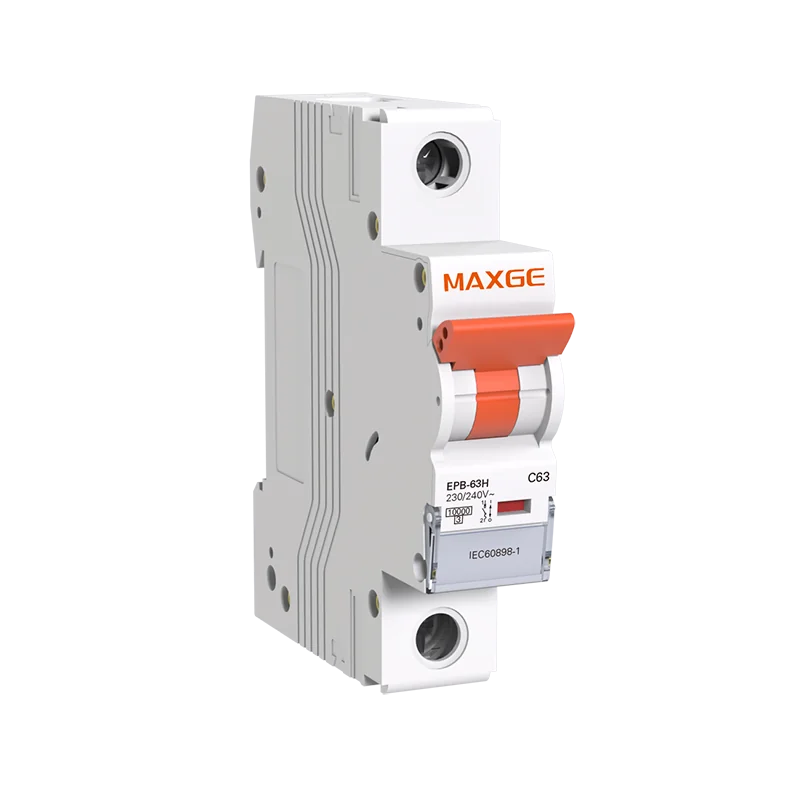
Electrical systems depend on reliable protection to maintain safe and stable operation. From commercial buildings and residential projects to general industrial applications, low-voltage circuits require devices that can respond quickly when abnormal current conditions occur. Among the various electrical control products available today, the miniature circuit breaker remains an important part of terminal circuit protection.
A well-selected breaker can help protect wiring and connected equipment from overload and short-circuit faults while supporting efficient installation and maintenance. For engineers, contractors, distributors, and electrical professionals, understanding how a miniature circuit breaker works and where it fits within a complete protection system is essential when selecting products for a project.
The Role of a Miniature Circuit Breaker in Low-Voltage Systems
A miniature circuit breaker is designed to interrupt electrical current when a circuit experiences conditions such as overload or short circuit. Unlike a traditional fuse that needs to be replaced after operation, an MCB can generally be reset after the fault has been addressed, making it practical for many distribution applications.
The compact structure of an MCB allows it to be installed in distribution boards without occupying excessive space. Its modular design also makes it suitable for organized electrical installations where multiple circuits require independent protection.
Modern electrical control products often need to balance protection, installation efficiency, operating reliability, and compatibility. This is why the selection of a suitable breaker should consider more than rated current alone.
Understanding the Miniature Circuit Breaker Application
The miniature circuit breaker application varies according to the electrical load, system voltage, installation environment, and required protection characteristics. MCBs are commonly used in terminal power distribution for lighting, sockets, commercial facilities, offices, residential buildings, and general industrial applications.
An AC miniature circuit breaker is particularly relevant to alternating-current distribution systems. When selecting one, professionals should review important parameters such as rated current, rated voltage, breaking capacity, number of poles, and tripping characteristics.
For example, different tripping curves can be suitable for different types of loads. The appropriate selection helps reduce unnecessary tripping while maintaining effective protection against abnormal current conditions. Installation requirements, conductor capacity, and coordination with upstream and downstream protective devices should also be considered as part of the overall system design.
What to Consider When Choosing Electrical Control Products
Selecting electrical control products is not simply a matter of comparing product prices. Electrical professionals also need to evaluate technical specifications, applicable standards, installation methods, product compatibility, and long-term service requirements.
Breaking capacity is particularly important because it indicates the fault current that the breaker can safely interrupt under specified conditions. Rated current should correspond with the protected circuit and conductor characteristics, while the number of poles should match the configuration of the electrical system.
Installation efficiency can also influence product selection. DIN rail mounting, clear product markings, accessible terminals, and compatible accessories can make installation and maintenance more straightforward.
For projects involving large quantities of breakers, consistency across product specifications is equally important. A clear product range allows procurement teams and electrical contractors to select suitable models for different circuits without unnecessarily complicating inventory management.
How to Evaluate Miniature Circuit Breaker Manufacturers
When comparing miniature circuit breaker manufacturers, buyers should look beyond product appearance and focus on technical documentation, manufacturing capabilities, certifications, product range, and technical support.
A dependable manufacturer should provide clear information about rated voltage, rated current, breaking capacity, tripping characteristics, applicable standards, dimensions, and installation requirements. Product documentation makes it easier for engineers and installers to determine whether a particular model fits the intended application.
MAXGE provides a range of low-voltage electrical products covering MCB, RCD and RCBO, MCCB, ACB, smart breakers, distribution boxes, industrial devices, and related accessories. Its product portfolio is designed to address different electrical protection and control requirements across low-voltage applications.
For example, the EPB-63M miniature circuit breaker is designed for terminal power distribution and general industrial applications with AC 50Hz systems. It supports rated currents up to 63A and provides overload and short-circuit protection.
Building a More Practical Protection Strategy
A miniature circuit breaker is only one part of a complete electrical protection system. Depending on the application, it may work alongside residual current protection, surge protection, contactors, isolating switches, or other electrical control products.
This approach allows each device to perform a defined function within the electrical system. MCBs can provide overcurrent protection, while other protective or control devices address leakage, switching, isolation, or surge-related requirements.
For project planning, it is therefore useful to consider the complete distribution architecture rather than selecting individual breakers independently. Proper coordination between devices can contribute to clearer circuit management and more efficient maintenance.
Choose Suitable Protection for Every Application
The continued use of miniature circuit breakers reflects their practical role in modern low-voltage distribution. Their compact form, resettable operation, modular installation, and protection against overload and short-circuit faults make them suitable for a wide range of terminal circuits. However, selecting the right protection device also requires consideration of system voltage, current ratings, installation conditions, application requirements, and coordination with other protective devices.
For professionals evaluating miniature circuit breaker manufacturers or comparing electrical control products, technical specifications and application requirements can provide a practical basis for product selection. MAXGE provides a broad low-voltage electrical product portfolio covering circuit protection and control, with solutions extending to renewable energy, PV, energy storage, and EV charging applications. Its manufacturing capabilities include automated production across its Deqing and Wuhu manufacturing bases, with more than 90% automation, supported by an R&D team, patented technologies, software copyrights, CNAS-related laboratory capabilities, and international certifications.
With a presence in more than 60 countries and over 80 distribution partners, MAXGE serves different markets through a brand portfolio that includes MAXGE, EMA, and GEBLER. Its approach combines customer-focused support with continued product development and cooperation with distribution and project partners. If you need product specifications, application guidance, or assistance selecting suitable protection options, you can contact MAXGE through its official contact page.
