
A microgrid rarely operates under one electrical condition for its entire life. A site may spend most of the day connected to a stable utility network, then face a weak-grid period, an intentional islanding event, or a sudden change in local demand.
Renewable output can also rise and fall while batteries charge or discharge. Reliable microgrid solutions therefore depend on equipment that can keep energy exchange controlled as operating conditions change.
The power conversion system sits directly between stored DC energy and the AC side of the microgrid, so its behavior affects voltage, frequency, power flow, and the ability of local resources to remain coordinated when external grid support is reduced.
Reliability Begins at the Energy Conversion Interface
The basic task of a power conversion system is bidirectional conversion between a battery or other DC resource and an AC network. In a grid-connected state, that conversion follows the electrical conditions established by the utility and manages charging or discharging according to the site’s operating objective.
Once the microgrid becomes isolated, the electrical reference can no longer be assumed to come from the external grid. The local network must then maintain a usable electrical environment while generation, storage, and loads continue to exchange power.
The conversion stage therefore becomes part of the stability mechanism rather than a simple energy-transfer channel. Its control behavior must match the electrical role expected in each operating state. Direction of power flow adds another layer to that role.
During charging, the converter draws energy toward the battery; during discharge, it sends stored energy back to the AC bus. Those reversals may happen because of renewable surplus, a scheduled energy-management target, a loss of utility supply, or an abrupt load increase.
The converter has to change its operating point without introducing an electrical disturbance larger than the local network can tolerate. Bidirectional capability is therefore meaningful only when it is accompanied by stable control through changing power commands and changing network conditions.
Grid-Connected, Off-Grid, and Weak-Grid Conditions
A strong utility grid can absorb disturbances and provide a stable voltage and frequency reference, but off-grid and weak-grid systems cannot rely on the same support. Conversion equipment designed for several scenarios must respond differently when grid strength changes, especially during transitions between grid-following and grid-forming operation.
In remote systems, solar-storage-diesel arrangements, or local networks with variable loads, sudden demand changes can create larger voltage or frequency deviations than they would on a strong public grid.
Well-designed microgrid solutions account for these conditions through coordinated power control, local references, and operating logic that can continue functioning when the external network is unreliable or unavailable. Seamless transitions are particularly valuable where an interruption would affect critical processes or local services.
Transitions deserve separate attention because the hardest moment is often the interval between grid-connected and islanded operation. Protection logic, synchronization, available battery power, generator status, and local load all influence the transfer. Adequate rated power alone cannot prevent instability if control modes conflict, so transition behavior belongs in practical reliability testing.
Load Behavior and Coordination With Other Assets
Reliability also depends on how the conversion equipment reacts to the rest of the microgrid. Batteries, photovoltaic generation, diesel generators, controllable loads, and supervisory controllers all operate on different time scales and with different constraints.
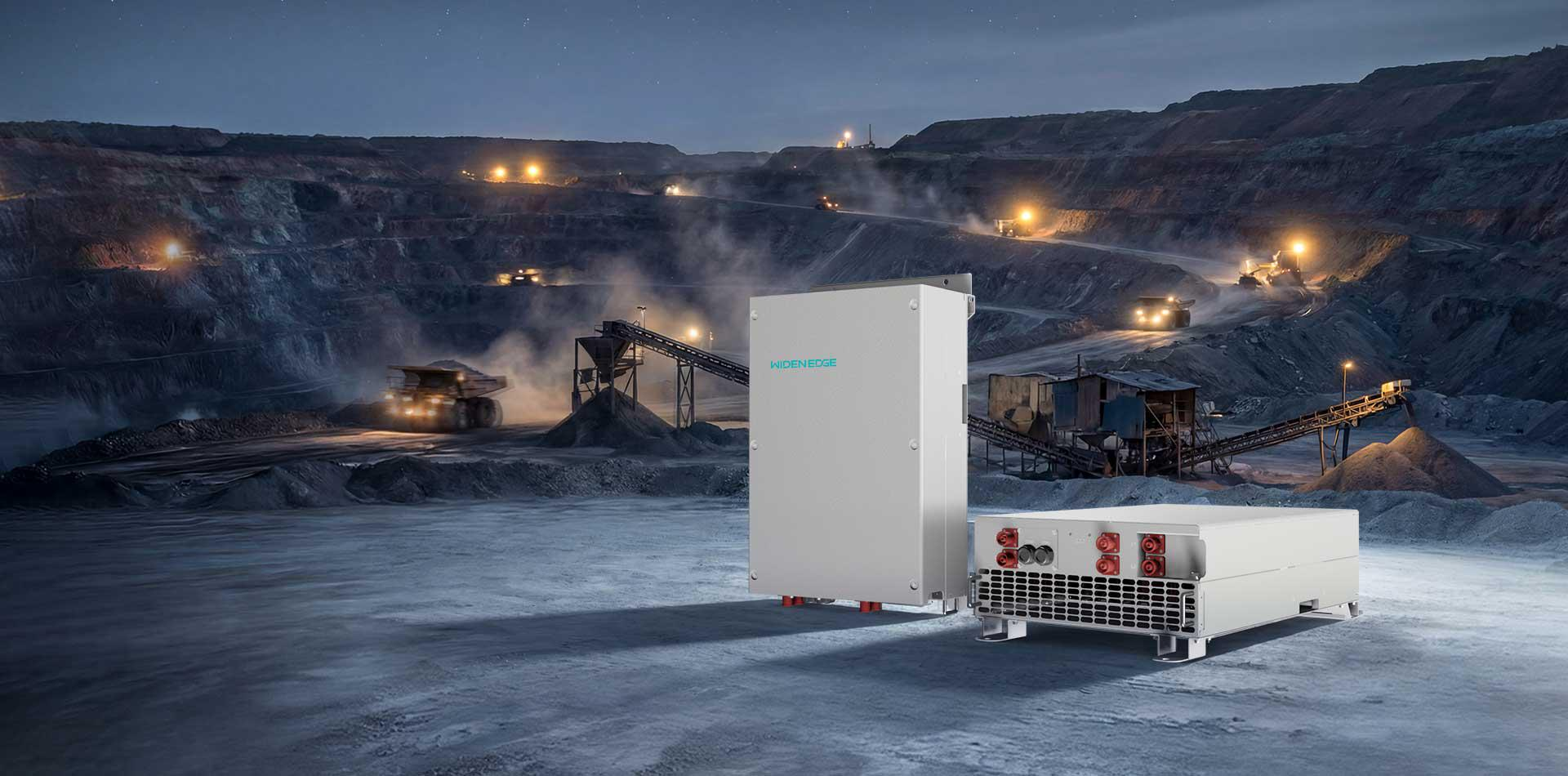
A power conversion system must exchange power without creating conflicts among these resources, while the local controller determines how the overall system should respond to changing supply and demand. WidenEdge structures its microgrid platform around grid-forming PCS together with MGC energy storage inverters, PV/DC and EV/DC converters, and Hub local controllers.
Within that architecture, the platform is intended for off-grid, weak-grid, grid-connected, and hybrid projects, including island and remote-area power systems and solar-storage-diesel configurations. The significance lies in treating conversion and local coordination as parts of one operating architecture.
From Equipment Capability to Site-Level Reliability
A microgrid can contain capable individual devices and still perform poorly if those devices cannot work together across real operating conditions. Reliability comes from matching conversion capability, control mode, source characteristics, load behavior, and grid strength. The converter must therefore be evaluated not only by rated power, but also by how it behaves during transitions, disturbances, and changing energy flows.
For microgrid solutions serving sites with uncertain grid quality or mixed generation, the practical requirement is continuity of controlled operation rather than peak conversion alone. A platform that links storage, renewable generation, diesel backup, local loads, and control logic can create a clearer path from component performance to stable system behavior.
Stable Operation Through Changing Conditions
The central role of power conversion becomes most visible when conditions stop being ideal. Grid connection may disappear, renewable production may change quickly, or local demand may become unbalanced and unpredictable. In those moments, the power conversion system must preserve a workable electrical environment while the rest of the microgrid reorganizes around the new condition.
WidenEdge’s platform reflects that system-level view by combining grid-forming conversion with local control and multiple energy resources. Reliable local energy systems are therefore defined less by a single operating mode than by the ability to keep power coordinated as the operating mode itself changes.
SEO Title: How a Power Conversion System Supports Reliable Microgrid Operation Across Different Scenarios | WidenEdge
Meta Description: Read our latest insights on How a Power Conversion System Supports Reliable Microgrid Operation Across Different Scenarios. Explore controls and energy flow.
