
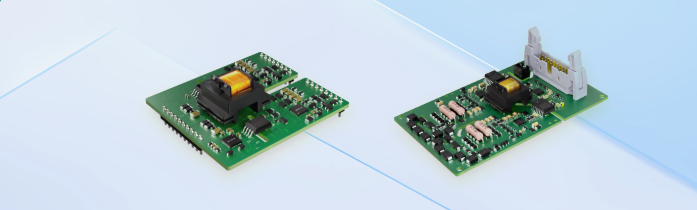
Insulated-gate bipolar transistors (IGBTs) play an important role in modern power conversion, enabling engineers to control electrical energy in renewable power systems, railway traction equipment, and industrial motor drives. Their ability to handle substantial currents and voltages makes them suitable for demanding applications where switching performance, thermal management, and operational reliability matter. Understanding where these devices are used helps engineers select appropriate power modules, gate drivers, and testing strategies.
- Wind Power: Converting Variable Energy into Stable Electricity
Wind turbines operate under constantly changing wind conditions. Their generators produce electrical power that must be converted and regulated before it can be delivered to the grid. Power electronic converters manage this process, allowing turbine speed and electrical output to respond to changing operating conditions.
IGBT modules commonly serve as switching elements in machine-side and grid-side converters. In direct-drive and doubly fed induction generator systems, their roles depend on the converter topology. They can also support blade pitch control systems, which adjust rotor blade angles to maintain suitable operating conditions.
An effective IGBT gate driver is essential to this process. It supplies the appropriate gate signals, controls switching behavior, and supports protection against abnormal operating conditions. Driver selection should consider module compatibility, switching frequency, isolation, and fault response.
Wind installations also face temperature fluctuations, vibration, and difficult maintenance access, particularly offshore. Engineers must therefore evaluate thermal design, electrical insulation, and long-term reliability alongside conversion efficiency. System-level validation helps identify potential weaknesses before equipment is deployed in locations where repairs can be costly.
- Railway Traction: Managing Acceleration and Braking
Electric trains, metros, and trams rely on traction converters to control motor speed and torque. These converters transform the available electrical supply into variable-frequency, variable-voltage power suitable for traction motors. IGBT-based converters remain widely used in railway propulsion systems, although silicon carbide devices are also gaining ground in some applications.
During acceleration, power semiconductors regulate energy delivered to the motors. During regenerative braking, the traction system can convert the motors’ mechanical energy back into electrical energy, which may be returned to the supply or stored, depending on the system design.
Railway environments impose demanding requirements on power electronics. Repeated acceleration and braking create changing electrical and thermal loads, while vibration and limited installation space add mechanical and packaging challenges. Engineers must assess insulation coordination, cooling, electromagnetic compatibility, and fault-handling behavior.
An IGBT gate driver must match the selected power module and converter topology while providing dependable switching control under changing conditions. Testing should cover switching behavior, protection functions, and thermal performance. For railway equipment, the wider qualification process must also address the applicable environmental and safety requirements.
- Industrial Drives: Precision, Productivity, and Energy Control
Industrial motor drives are another major application area. Pumps, fans, compressors, conveyors, elevators, machine tools, and production equipment often need adjustable motor speed rather than continuous operation at a fixed speed. Variable-frequency drives use power converters to regulate motor voltage and frequency according to process demands.
In these systems, IGBT modules switch electrical power to produce controlled motor output. Appropriate drive design can improve process control and reduce energy consumption when compared with unsuitable fixed-speed operation. The actual benefit depends on the motor, load profile, control strategy, and operating conditions.
Different applications require different design priorities. A pump drive may emphasize efficiency and stable operation, while a servo drive requires rapid dynamic response and precise motion control. Heavy-duty equipment may place greater emphasis on overload capability, cooling, and service life.
Engineers should evaluate conduction and switching losses, current ratings, DC-link voltage, switching frequency, and cooling requirements together. Gate resistance and drive conditions also influence switching losses and electromagnetic behavior. An IGBT gate driver should therefore be selected as part of the complete converter design, not as an isolated component.
- How Engineers Select and Validate Power Driver Solutions
Across wind, rail, and industrial applications, successful power conversion depends on compatibility between the semiconductor, driver circuit, control system, and thermal design. Engineers should begin by defining operating voltage, current, switching frequency, load transients, environmental conditions, and required protection functions.
Validation should then progress from individual components to the complete system. Device-level testing can establish electrical characteristics, while board-level and module-level checks assess driver behavior and integration. System-level testing evaluates performance under representative operating conditions and helps reveal interactions that component tests alone may miss.
Firstack develops power semiconductor drivers, power stacks, and testing equipment for power conversion applications across renewable energy, rail transportation, and industrial systems. Its full-chain validation approach covers device, board, module, and system levels, supporting precision and reliability in semiconductor testing while helping reduce development time.
For engineering teams developing or qualifying power conversion equipment, this breadth of validation is relevant when assessing design readiness. Digital supply chain management and automated production also support process visibility, traceability, and on-time delivery. These capabilities can matter to equipment manufacturers coordinating component qualification, production schedules, and system integration.
Building Reliable Power Conversion Systems
Wind energy, railway traction, and industrial drives share a need for controlled switching, efficient energy conversion, and dependable operation, but each application presents distinct electrical, thermal, and environmental demands. Engineers must match semiconductor devices and driver solutions to the actual operating profile rather than relying on ratings alone.
Careful component selection, structured testing, and system-level validation help reduce integration risks and improve design confidence. With expertise spanning power semiconductor drivers, power stacks, and testing equipment, Firstack provides relevant capabilities for engineering teams developing and validating power electronics for demanding industrial applications.
