
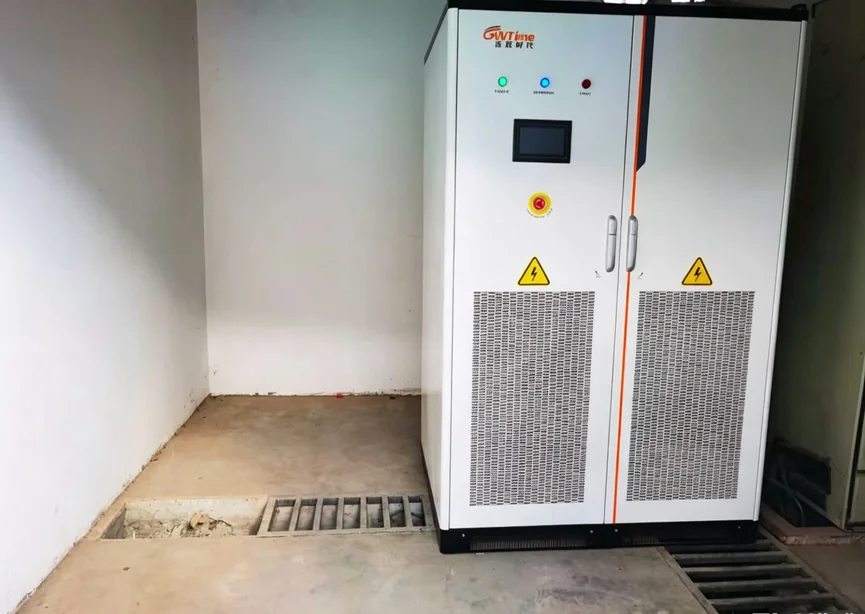
Supply voltage, electrical separation and the required operating state impose conditions that additional kilowatts cannot exchange for one another. A heavy industrial installation may also need to start machinery, retain selected duties during an outage or recover from a complete shutdown.
Each requirement creates a different acceptance test. A confirmed mismatch excludes an arrangement before its rated power and operating capabilities can be compared with those of other candidates meeting necessary conditions for the industrial duty.
Connection Conditions That Eliminate a Candidate
Eligibility rests on documented voltage, frequency and phase connection requirements. A proposed unit either has an applicable interface for the receiving distribution or requires a specifically designed intermediate arrangement. The equipment record needs to identify that arrangement before the unit is treated as a candidate for the stated connection.
Physical acceptance can exclude an otherwise suitable electrical candidate. The receiving position has to accommodate its stated dimensions and mass, while the site arrangement preserves the access required for installing and subsequently servicing the selected equipment.
Grid-connected and islanded operation add separate state requirements. A project assigned to support an isolated bus needs the relevant control and source arrangement as well as an acceptable grid interface. Evidence for normal utility operation does not settle the equipment’s duties after that utility connection is lost.
An unresolved field differs from a documented mismatch. Missing information leaves a selection decision pending, whereas a confirmed incompatible interface excludes the proposed arrangement unless the design changes. A commercial hybrid inverter can therefore remain unconfirmed even when its headline output appears sufficient; numerical power preference cannot complete a missing connection assessment.
Turning the Load Description into Acceptance Tests
Sustained demand, acceleration events and the duties retained after an interruption create distinct load cases. Their requirements remain separate when each operating case is tested against a commercial hybrid inverter. A documented starting allowance belongs to its stated duration and conditions, while the subsequent running load returns to the sustained-duty assessment.
The load case also identifies what operates together. A motor starting against other running machinery presents a combined event, and an outage may trigger a different restart sequence from an orderly production start. The proposed sequence supplies the event to be tested, including concurrent supporting equipment that remains necessary.
Changing a starter or separating restart times revises that event rather than changing an inverter’s documented rating. The selection record can identify which acceptance test needs updating after such a change. Previously confirmed connection conditions remain traceable, while the affected starting-duty conclusion acquires a revised basis.
An outage duty has an energy source as well as a load. The available battery contribution, retained reserve and expected source recovery determine what can sustain the accepted electrical task. These entries prevent a converter selected for sufficient instantaneous output from being assigned an unsupported operating period.
Applying the Filters to Industrial Configurations
The GWTime GWP335TS-400-A remains a candidate where its documented 230/400 V AC interface and internal isolation transformer satisfy both the specified connection and electrical-separation requirements. Its rated output is 335 kW, with 484 A rated AC current. These parameters enter the selection record under their respective requirements.
The GWP500TS-400-A supplies direct 400 V AC output at 500 kW rated power, with 794 A maximum AC output current. Its transformer-based configuration includes a standard STS for grid-connected and island transfer. Those features make it another defined candidate where the required connection and operating duties correspond to its documented arrangement.
Both references operate over a 680-950 V DC range, making the proposed battery conditions another acceptance field. An acceptable AC connection can coexist with an unresolved battery match. The recorded DC requirements keep that decision visible instead of allowing successful assessment at one interface to stand in for another.
Service arrangements can enter the same filter set where continuity during maintenance forms part of the requirement. The 335 kW configuration specifies a modular N+1 architecture. Its relevance depends on the actual equipment arrangement and required service duty, with the post-intervention operating case retained as an identifiable configuration question.
When the Project Requires Megawatt Coordination
Station-level connection and coordinated island duties can introduce another selection branch for a commercial hybrid inverter. The relevant question is whether the project requires those interfaces and control tasks. Moving to this branch follows the installation requirement, rather than treating the largest available rating as the default industrial answer.
The 2500 kW family from GWTime includes a 400 V output configuration and a customizable 35 kV configuration. Their transformer arrangements are 2500 kVA at 690/400 V and 690 V/35 kV respectively. Selecting between them retains the receiving connection requirement even though both versions occupy the same rated-power class.
Grid forming, coordinated multi-unit black start and parallel island operation are documented functions of this GWTime family, alongside VSG, PQ and VF modes. These functions become selection evidence for corresponding tasks. The project still identifies the energy resources, participating equipment and sequence through which the required island operation is carried out.
Any remaining hard constraint deserves attention before the surviving candidates are ranked. A larger power value supplies no substitute for a missing interface or an unconfirmed operating state. The resulting shortlist is defensible when every retained candidate has evidence against the complete set of necessary conditions for the industrial duty being specified.
