
Nighttime can expose respiratory limitations that remain less obvious during the day. In chronic obstructive pulmonary disease, relaxed respiratory muscles, altered sleep stages, mucus retention, and reduced ventilatory drive may allow carbon dioxide to rise while oxygenation becomes less stable.
A conventional cpap device primarily holds the upper airway open with one continuous pressure, which can be useful when obstructive sleep apnea coexists with chronic obstructive pulmonary disease (COPD) but may not provide enough assistance for hypoventilation.
A home bilevel system instead separates inspiratory and expiratory pressure, creating pressure support that can reduce the work of breathing. The clinical objective is not simply to increase pressure; it is to maintain adequate ventilation without making exhalation uncomfortable or causing excessive leakage.
For that reason, selecting a cpap device or a bilevel alternative requires a documented sleep assessment, arterial or transcutaneous carbon-dioxide data when indicated, symptom review, and a prescription tailored to the patient. Morning headaches, fragmented sleep, daytime fatigue, and repeated exacerbations can all prompt closer evaluation, but settings should be chosen by qualified clinicians rather than copied from another user.
A useful baseline also records usual sleep position, exacerbation history, inhaled medicines, oxygen prescription, and caregiver capacity, because these details influence whether the selected interface and support plan will remain workable after the patient returns home. That baseline makes later changes easier to interpret and explain.
Matching Bilevel Support to Overnight Breathing
Effective nocturnal support depends on how well the machine responds to changing respiratory demand across the night. An auto cpap device can adjust baseline pressure when airway obstruction varies, yet COPD-related hypoventilation may also require a backup rate, a defined pressure-support range, or a target-volume function.
Bilevel S/T and APCV modes can provide timed assistance when spontaneous breathing becomes slow or shallow, while volume-assured functions can vary inspiratory pressure toward a defined tidal-volume objective.
Comfort must remain part of the calculation because abrupt pressure rises, an unsuitable trigger, or delayed cycling may disturb sleep and worsen mask leakage. A carefully configured auto cpap device can still play a role for predominantly obstructive events, especially when data show that ventilation remains adequate.
For patients who need more support, clinicians can review pressure, flow, respiratory rate, tidal volume, leak, oxygen saturation, and use time together rather than judging treatment from one number. Clinicians generally aim for the lowest effective level of support that helps stabilize ventilation, maintain patient–machine synchrony, and remain tolerable across different sleeping positions and stages.
During titration, technicians should allow enough observation time after each adjustment to separate a genuine improvement from a temporary response to arousal, repositioning, or a corrected leak, thereby avoiding unnecessary pressure escalation. Every adjustment should be documented with its observed overnight effect.
Comfort, Monitoring, and Continuity at Home
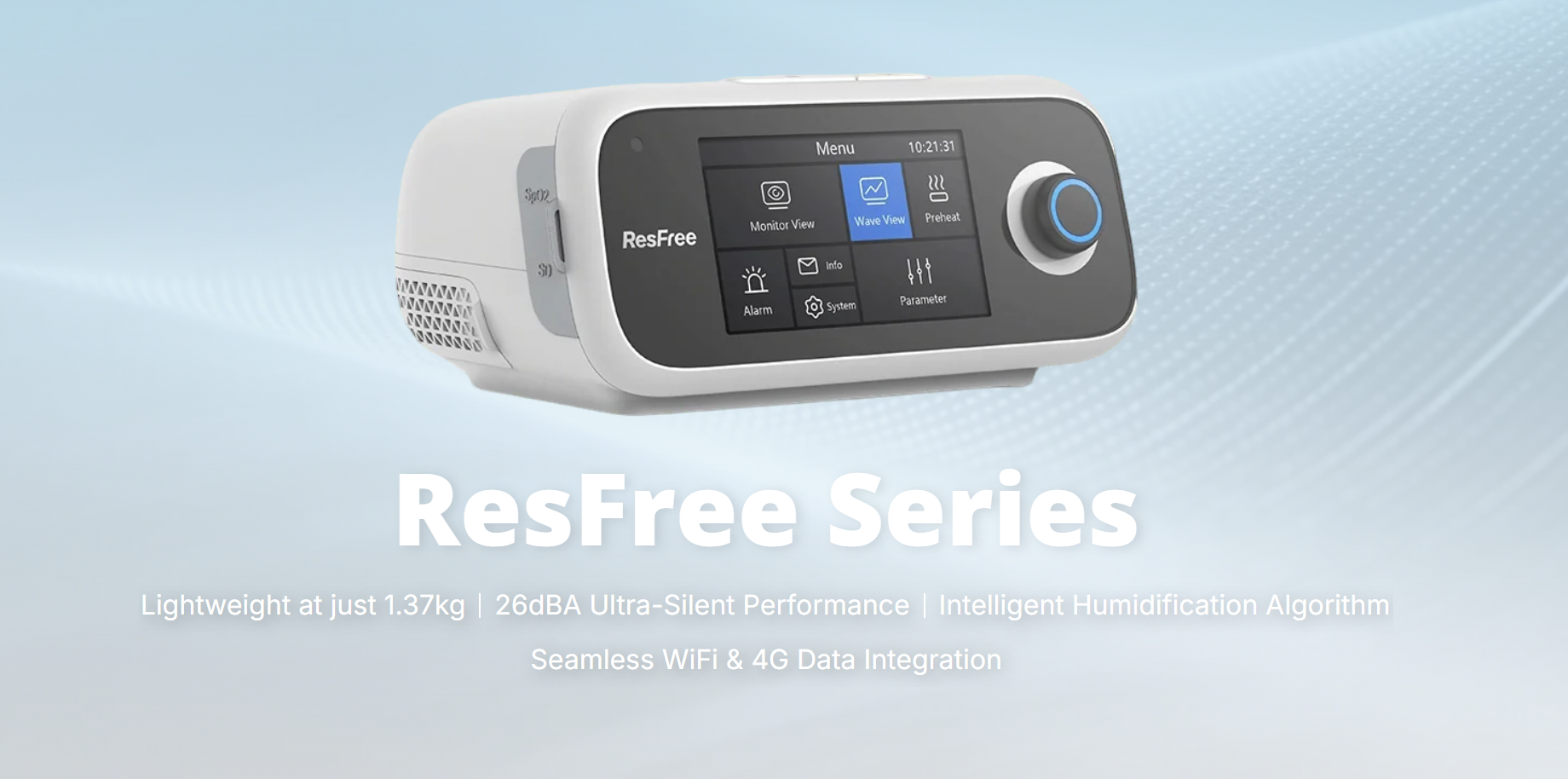
Long-term results depend on whether treatment remains practical after the initial titration. For home use, the ResFree range from Beyond separates obstructive-sleep functions from the stronger ventilation options provided by S, T, S/T, APCV, Volume Assured Function (VAF), and selected High Flow configurations.
Pressure capability remains model-specific. Inspiratory and expiratory sensitivity, rise-time control, and leak compensation allow the breathing interaction to be refined, while integrated humidification and an optional heated tube can reduce dryness and condensation.
Mask-fit checks are valuable before sleep because a small seal problem can become a large overnight leak once pressure increases. Optional SpO₂ monitoring adds pulse and oxygen-saturation trends, and Wi-Fi or 4G connectivity can move treatment data to mobile or web-based review tools.
Compliance reports and trend charts from Beyond can help authorized clinicians identify declining use, persistent leakage, or changes in respiratory patterns. Remote information should support, not replace, clinical assessment: worsening breathlessness, confusion, chest discomfort, fever, or sustained desaturation requires timely medical evaluation rather than a remote setting change made without context.
A scheduled review within the first weeks can catch small problems while habits are still forming, and later reviews can be spaced according to stability, data quality, symptom change, and the availability of local respiratory support. Consistent review prevents isolated values from driving unnecessary intervention.
A Disciplined Plan for Safer Long-Term Use
Before equipment enters the bedroom, clinicians need to confirm the cause of nocturnal hypoventilation and document the goals of therapy. The care team should determine whether the priority is upper-airway stabilization, carbon-dioxide clearance, oxygenation, respiratory-muscle unloading, or a combination of these needs.
After titration, the patient and caregiver require practical instruction on mask placement, humidifier hygiene, tubing care, filter replacement, alarm response, and what to do during power loss or an acute exacerbation. Follow-up should compare symptoms with objective trends instead of assuming that nightly use alone proves success.
Leakage, residual events, breathing rate, oxygen data, and, when appropriate, carbon-dioxide measurements can guide cautious refinements. Supplemental oxygen must be handled according to prescription because oxygenation can improve while ventilation remains inadequate.
Nocturnal bilevel treatment works best as one part of a broader COPD plan that includes inhaled therapy, smoking cessation, vaccination, pulmonary rehabilitation, nutrition, and prompt exacerbation management. Coordination among technology, education, and clinical review can turn home ventilation into a stable nightly routine rather than an intimidating response to breathing difficulty.
Patient-reported experience deserves equal weight with downloaded values: a technically adequate night that causes anxiety, aerophagia, severe dryness, or repeated awakenings is unlikely to become a sustainable treatment pattern without targeted problem solving. Shared goals help families recognize what successful treatment should look like.
