
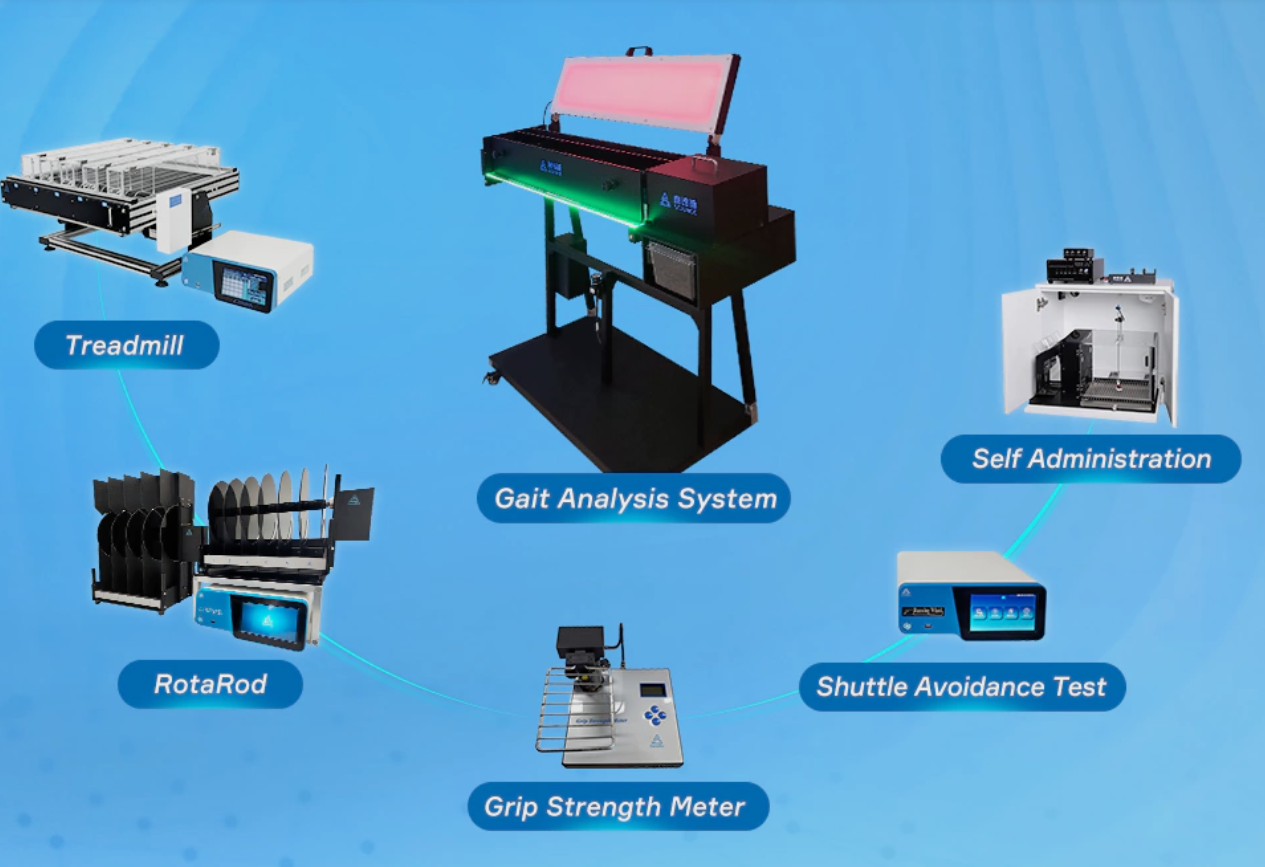
Neuroscience and behavioral research depends on accurate experimental tools to evaluate animal responses, neurological changes, and treatment effects. Researchers must consider experimental objectives, data requirements, equipment accuracy, and supplier support before making a purchase decision. From motor function evaluation to cognitive testing and metabolic analysis, suitable instruments help laboratories improve research efficiency and obtain reliable experimental results. BioMed Easy provides life science instruments and software solutions designed for animal behavior and neuroscience research applications.
Understand Research Goals Before Choosing Laboratory Animal Equipment
The first step in selecting research instruments is identifying the purpose of the experiment. Neuroscience studies cover various areas, including motor coordination, learning and memory, emotional behavior, reward mechanisms, pain evaluation, and pharmacological research. Each application requires different testing methods and measurement approaches.
For example, researchers studying neurological disorders may focus on movement ability, balance, or muscle strength. In these cases, gait analysis systems, rodent treadmills, and rotarod systems can provide valuable behavioral data. Studies involving cognitive function may require maze systems, operant chambers, or avoidance testing platforms to evaluate learning and memory performance.
Clear research objectives help laboratories select suitable equipment and support future studies. This is especially important for universities, CROs, and pharmaceutical research organizations that often conduct multiple types of preclinical experiments.
Match Equipment Functions with Specific Research Applications
Different neuroscience fields require specialized instruments. Motor coordination studies often focus on movement patterns, endurance, and physical performance. Equipment such as mouse and rat gait analysis systems, animal treadmills, rotarod fatigue testers, and grip strength meters are commonly used to evaluate motor function and neurological changes.
Cognitive-behavioral research requires tools that can measure learning processes and memory responses. Touchscreen analysis systems, Skinner operant chambers, passive avoidance testers, and shuttle box systems allow researchers to study cognitive ability, attention, and behavioral adaptation under controlled conditions.
Emotional and psychological behavior studies require another category of instruments. Researchers analyzing anxiety, stress, fear, or reward responses may use startle reflex systems, contextual fear conditioning systems, sucrose preference test systems, and automated learned helplessness systems to collect behavioral information.
Evaluate Accuracy, Data Quality, and Software Integration
Accuracy is a key consideration when selecting laboratory animal equipment, because experimental reliability depends on consistent measurement conditions. Behavioral studies often compare different treatment groups, and even small variations in testing procedures may influence research conclusions.
High-quality instruments should provide stable operation, precise control, and repeatable data collection. For example, movement analysis systems need to capture detailed activity changes, while metabolic monitoring systems must accurately measure energy consumption and physiological indicators.
Software functions are also important in modern laboratories. Automated data acquisition and analysis reduce manual errors and improve efficiency. Integrated software platforms allow researchers to organize experimental information more effectively and support more detailed behavioral interpretation.
Consider Equipment Compatibility and Long-Term Research Value
Laboratories should consider whether selected instruments can support broader research programs. Equipment with multiple applications can help researchers expand studies without replacing existing systems.
For metabolic and nutritional research, small-animal energy metabolism monitoring systems, rodent metabolic cages, and gas-exchange metabolic treadmills provide solutions for studying energy balance, feeding behavior, and physiological changes. These systems are useful in research areas such as obesity, metabolism, and drug evaluation.
For pharmacological and physiological studies, researchers may require additional instruments, including small-animal nebulizers, paw volume meters, temperature controllers, and activity monitoring systems. These tools support studies involving drug administration, inflammation evaluation, and physiological responses.
Balance Cost, Service Support, and Supplier Capability
Price is an important factor when purchasing research instruments, but laboratories should also evaluate long-term value. Equipment reliability, maintenance requirements, technical support, and application guidance influence the overall investment return.
For research institutions, dependable instruments can reduce interruptions and improve experimental efficiency. For distributors and agents, selecting manufacturers with professional support capabilities can help provide better service to end customers.
A reliable supplier should provide more than individual products. Comprehensive technical consultation, customization options, and after-sales support help researchers select suitable equipment and achieve successful applications in different experimental environments.
Select a Partner with Comprehensive Neuroscience Solutions
A supplier with broad product coverage can better support laboratories with diverse research requirements. Instead of purchasing separate systems from multiple sources, researchers can benefit from integrated solutions covering different experimental stages.
A complete portfolio may include equipment for motor function, pain, cognition, emotional behavior, metabolism, and physiological research. This approach improves compatibility and simplifies laboratory management.
Improve Research Efficiency with the Right Equipment Selection
Choosing laboratory animal equipment requires a comprehensive evaluation of research goals, technical performance, application suitability, and supplier support. The right instruments help researchers improve data consistency, optimize experimental workflows, and support reliable scientific discoveries.
With professional R&D capabilities, manufacturing expertise, and a focus on life science research applications, BioMed Easy provides innovative solutions for animal behavior, neuroscience, pharmacology, and related fields. The company supports research institutions, universities, CROs, and pharmaceutical organizations with reliable instruments, professional service, and comprehensive experimental solutions to advance scientific research.
