
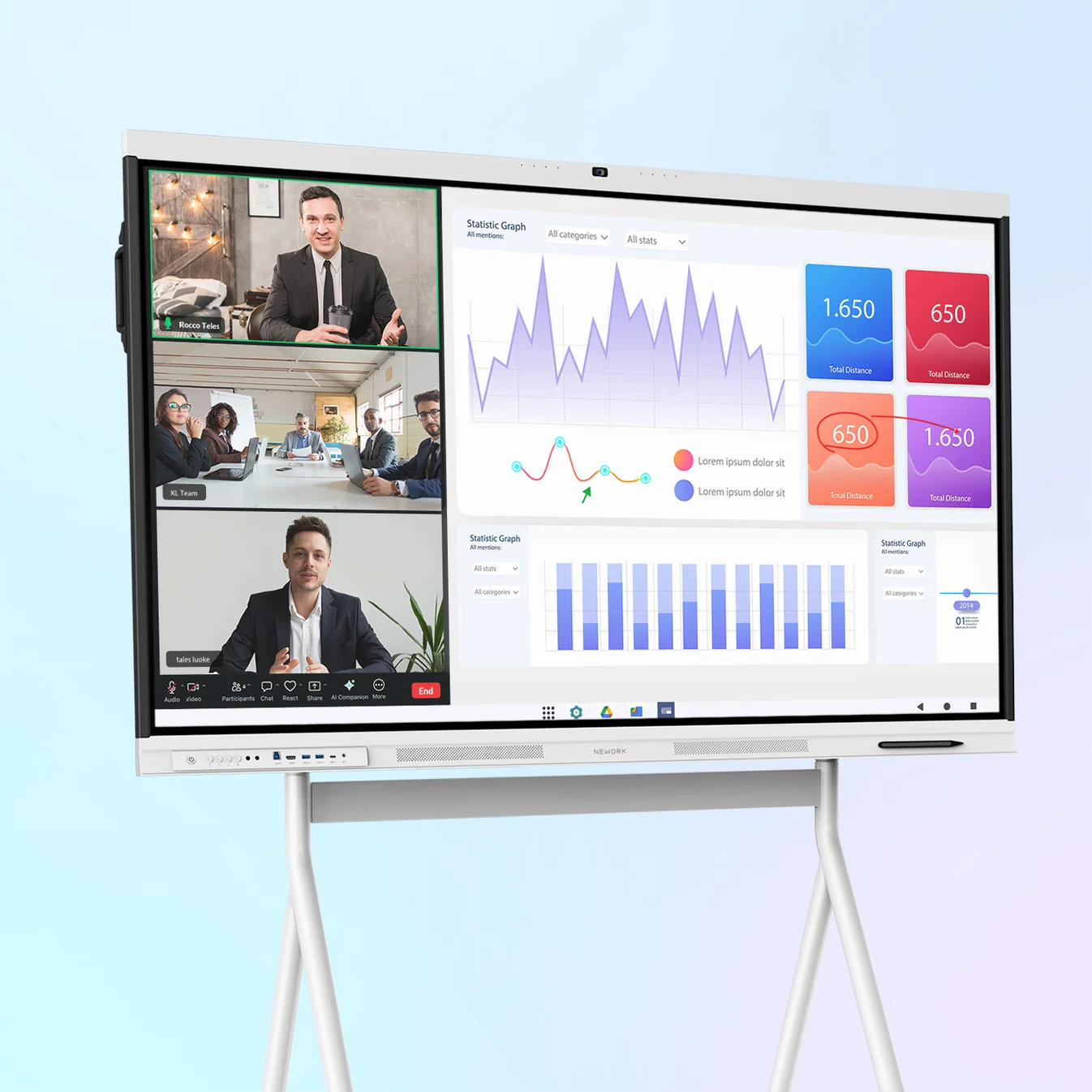
Collaboration technology is moving beyond the role of a passive meeting-room display. Modern teams expect a shared surface to support presentation, discussion, annotation, remote participation, content exchange, and follow-up. When each activity depends on separate equipment, even a well-equipped room can become difficult to use.
This shift makes workflow continuity increasingly important. A smart board must do more than display information clearly. It should help participants move from opening a document to discussing it, changing it, sharing it, and preserving the result without repeatedly rebuilding the working environment.
Nework reflects this broader direction through interactive display, casting, annotation, conferencing, and managed operation. The NewBoard P series for business illustrates how a smart board can support several stages of collaboration while reducing the number of disconnected tools that participants must manage during one session.
From Hardware Features to Workflow Continuity
Older meeting rooms often depend on several separate devices. A display presents content, a camera supports remote participants, another device handles audio, and a whiteboard captures ideas. Each component may perform well, but the complete process can still involve repeated switching and additional setup.
A more integrated workflow keeps discussion and working content on the same surface. Participants can display material, annotate documents, develop ideas on a digital canvas, and preserve the result. The value comes from reducing interruptions between tasks rather than simply increasing the number of available features.
Connectivity also affects workflow quality. A full-function USB-C connection can combine video, audio, data, touch-back control, and laptop power through one cable. Wireless casting and HDMI can remain available, but users benefit when the room offers one clear and predictable connection method for ordinary meetings.
Collaboration should also continue after content reaches the screen. Multi-user touch and annotation allow several participants to contribute directly. Cloud saving and QR sharing can then help convert discussion into a usable record instead of leaving teams with photographs, handwritten notes, or files stored on separate personal devices.
Buyers can therefore test a smart board through a complete working task. A useful trial can include connecting a normal laptop, opening a proposal, annotating it, involving remote colleagues, saving the result, and sharing the final material. This approach reveals workflow quality more clearly than isolated feature demonstrations.
AI as Background Infrastructure
In Nework‘s approach to smart collaboration, artificial intelligence becomes more useful when participants notice it less. A meeting should not require constant adjustment of camera exposure, focus, or microphone settings. Intelligent processing can manage routine visual and audio conditions in the background while participants concentrate on discussion and decision-making.
The P Series combines a professional camera with intelligent image optimization and an integrated microphone system with AI-based noise filtering. These functions can support clearer remote communication when lighting changes, people move around the room, or ordinary workplace sounds enter the meeting environment.
Normal offices rarely provide controlled studio conditions. Ventilation, typing, paper movement, shifting seats, and changing daylight are common. AI becomes valuable when these variables cause fewer interruptions, fewer repeated sentences, and less manual adjustment during the session.
The same principle applies to information handling. Handwriting recognition, shared annotation, and digital saving can reduce the manual work required after discussion. These tools do not replace human decisions, but they can make the route from conversation to documented action more efficient.
Organizations should therefore judge AI through practical outcomes. Useful measures include setup time, speech intelligibility, camera stability, participation quality, and completion of meeting records. An advanced feature has limited value if users still need frequent technical assistance to maintain a normal session.
Future-Proofing Through Interoperability and Lifecycle Control
Future-ready collaboration also depends on software compatibility. A Google EDLA-certified Android environment can provide access to familiar applications, managed updates, and secure sign-in. An optional Windows OPS module offers another route when specialist software requires a full Windows environment.
This flexibility allows organizations to standardize ordinary rooms without eliminating specialized workflows. Most users can remain within a common platform, while selected spaces can receive additional computing capability when a business application, training requirement, or institutional system genuinely depends on it.
Interoperability should be tested with the devices employees already use. Buyers can connect normal laptops, verify wireless presentation, test approved meeting applications, and examine account access. The goal is not to support every possible device, but to create several reliable workflows that users can understand.
Lifecycle management becomes more important when smart boards expand across several rooms. Centralized administration can help technical teams maintain settings, software, and updates without treating every installation as a separate technical environment. A consistent platform also simplifies training and troubleshooting.
Organizations should establish configuration ownership before large-scale deployment. Update rules, approved applications, account policies, and recovery procedures can be documented early. These controls reduce the risk that rooms gradually become inconsistent after local adjustments or temporary fixes.
The future of smart boards will therefore depend on more than individual specifications. Systems that connect people, content, software, and follow-up while remaining manageable over time can provide stronger long-term value. Nework represents this wider movement from display hardware toward integrated collaboration infrastructure.
