
Hydrogen sulfide (H₂S) is a workplace hazard that can develop with little warning. It is a colorless, highly toxic, and flammable gas associated with industries such as oil and gas, wastewater treatment, mining, agriculture, pulp and paper, and petroleum processing. Because H₂S can accumulate in confined or low-lying spaces, workers may face serious exposure before realizing that the atmosphere has become unsafe.
Understanding how hydrogen sulfide behaves is therefore an important part of industrial safety. Effective monitoring, appropriate ventilation, confined-space procedures, and properly selected detection equipment can help organizations identify atmospheric hazards before they become emergencies.
Why Is Hydrogen Sulfide So Dangerous?
One of the most deceptive characteristics of H₂S is its familiar rotten-egg odor at low concentrations. Relying on smell, however, is unsafe. Continued or high-level exposure can interfere with the sense of smell, meaning workers may no longer be able to detect the gas through odor even while dangerous concentrations remain present.
H₂S is also heavier than air, allowing it to collect in areas such as pits, manholes, sewers, tanks, underground vaults, and other poorly ventilated locations. These conditions make confined-space operations particularly concerning because gas concentrations can vary significantly from one area to another.
The health effects depend on both concentration and exposure duration. Lower exposures may cause irritation, headaches, dizziness, or breathing difficulties, while higher concentrations can rapidly cause unconsciousness and death. OSHA identifies 100 ppm as the NIOSH immediately dangerous to life and health level for hydrogen sulfide.
Where Can H₂S Build Up in Industrial Facilities?
Hydrogen sulfide can be generated naturally when organic material decomposes without sufficient oxygen. This makes wastewater facilities, sewage systems, manure storage areas, and similar environments potential sources. Industrial processes can also release H₂S directly or generate it as a by-product.
Oil and gas operations are another important concern. H₂S may occur in oil and gas deposits and can also be associated with processing activities. Mining, pulp and paper production, food processing, textile manufacturing, and petroleum refining can present additional exposure scenarios.
The risk is particularly significant when workers open tanks, inspect pipelines, enter underground spaces, clean wastewater equipment, or perform maintenance near potential gas sources. A routine task can therefore become hazardous when ventilation changes or a previously contained gas is suddenly released.
How Can a Gas Detector Improve Workplace Awareness?
A properly selected Gas Detector provides an objective method of monitoring atmospheric conditions instead of relying on human senses. OSHA recommends testing for hydrogen sulfide when exposure is possible and identifies electronic meters capable of detecting H₂S as appropriate monitoring equipment.
For confined-space work, atmospheric testing should take place before entry and continue during the operation. Monitoring should be combined with ventilation, established entry procedures, trained attendants, and appropriate emergency and rescue arrangements. A detector is an important safety layer, but it should form part of a broader hazard-control program.
The type of detector should match the work environment. A single-gas instrument can be suitable where H₂S is the clearly identified hazard. In locations where workers may encounter several atmospheric risks, a multi-gas instrument can monitor hydrogen sulfide alongside oxygen and other gases.
Choosing Portable Detection for Industrial Work
Portability becomes especially valuable when workers move between inspection points or perform maintenance in changing environments. A portable Gas Detector can accompany the worker and provide continuous personal monitoring rather than watching only one permanently installed location.
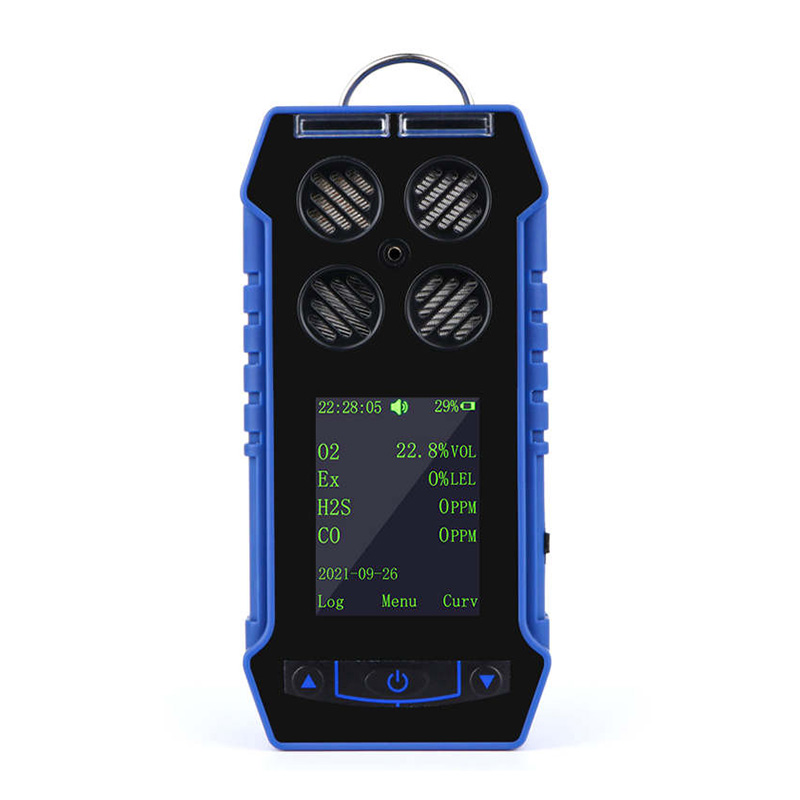
The portable gas detector range from Bosean includes single-gas and multi-gas models designed for different industrial applications. Its BH-4S 4 in 1 Multi Gas Detector, for example, can detect combustible gas, H₂S, carbon monoxide, oxygen, and other selectable gases. The published specifications state an accuracy of no more than ±5% F.S. and a response time of no more than 30 seconds.
The BH-4S uses natural diffusion sampling and provides LCD, LED, audible, and vibration indications for gas leakage, faults, and low battery conditions. Its listed working temperature for toxic gases is -20°C to 50°C, while continuous operating time is at least eight hours without an alarm. The unit weighs approximately 400 g with its battery and has an Ex ib IIC T4 Gb explosion-proof marking.
These specifications illustrate why procurement teams should evaluate more than the number of gases detected. Sensor configuration, sampling method, alarm modes, operating conditions, battery endurance, protection characteristics, and certification should all be considered against the actual workplace hazard assessment.
Building a Stronger H₂S Safety Strategy
Detection should be integrated into a hierarchy of controls rather than treated as the only safeguard. OSHA recommends identifying processes that can produce H₂S, evaluating exposure, eliminating the source where possible, and applying engineering and administrative controls when elimination is not feasible.
Ventilation is particularly important in enclosed areas where hydrogen sulfide can accumulate. Before workers enter a potentially contaminated space, the atmosphere should be tested from outside. Continuous monitoring during work can then help identify changing conditions that a single pre-entry reading might miss.
Emergency planning is equally important. Workers should understand alarm procedures, evacuation routes, communication methods, and confined-space rescue requirements. Personnel attempting rescue must also be properly trained and equipped because entering an H₂S-contaminated environment without adequate protection can create additional casualties.
About Bosean’s Gas Detection Solutions
Bosean is a gas detection manufacturer established in 2013, with its headquarters in Zhengzhou, China. The company integrates research and development, production, and sales, offering portable gas detectors, fixed gas detection systems, gas alarms, nuclear radiation detectors, and air quality monitoring equipment. Its solutions serve industries including oil, chemicals, refining, mining, metallurgy, pharmaceuticals, municipal engineering, and wastewater treatment.
For businesses evaluating H₂S monitoring equipment, the portable gas detector range provides options for different detection requirements, while OEM and ODM services are available for qualified customers. Organizations can also use the company’s dedicated Contact Us channel to discuss product selection, technical requirements, or customized detection solutions.
When selecting equipment, buyers should define the gases that may be present, identify the working environment, determine whether diffusion or pumped sampling is appropriate, and verify applicable certification and operating requirements. For additional product or application information, “Contact Us” can help connect specific workplace requirements with suitable detection equipment.
Hydrogen sulfide remains dangerous precisely because it can be difficult to recognize without reliable monitoring. By combining hazard assessment, ventilation, safe work procedures, training, emergency planning, and an appropriate Gas Detector, industrial organizations can build a more effective approach to controlling H₂S exposure.
