
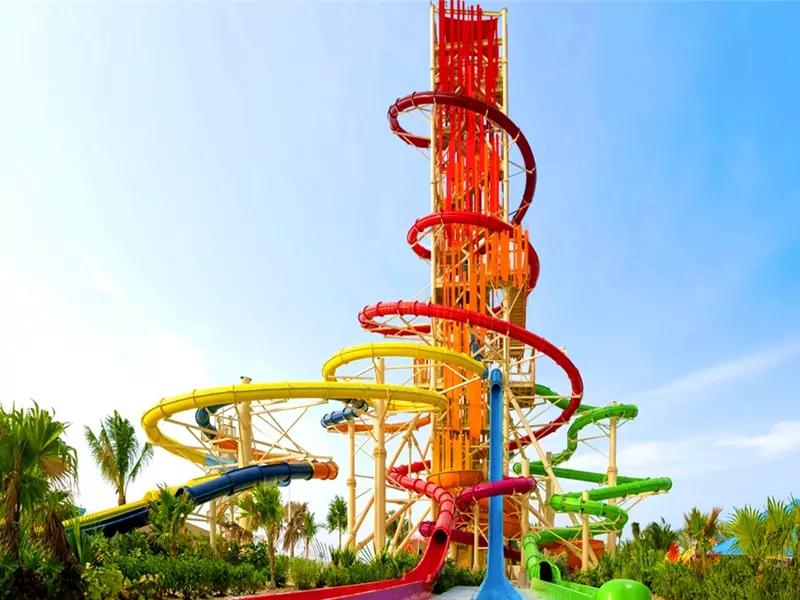
A successful water park is not created by simply placing popular attractions on available land. Developers must connect market positioning, site planning, guest circulation, attraction capacity, infrastructure, safety, and operating economics from the earliest stage. A clear development process helps reduce costly changes later and creates a destination that can serve guests efficiently. For investors evaluating a new project or expansion, choosing the right water park manufacturer and planning each water slide as part of the larger guest journey are important decisions.
- Define the Market and Project Position
The first step is to identify who the park is intended to serve. A resort attraction may emphasize family recreation and premium experiences, while a standalone park may require a broader mix of thrill, family, and children’s attractions. Location, climate, tourism patterns, competition, and expected visit frequency should also influence the attraction program.
The development brief should establish capacity, site area, theme, operating season, investment range, and revenue model. This provides a practical foundation for a water park design guide and keeps attraction selection connected to the business plan.
- Plan the Site Around Guest Flow
A strong master plan considers how visitors move from entrance areas to attractions, food and beverage, changing facilities, rest areas, and exits. Research on theme park carrying capacity shows that both attraction characteristics and spatial layout can influence visitor movement and congestion. Good zoning therefore needs to balance high-demand attractions with spaces that allow guests to pause and circulate comfortably.
Developers should also examine queue locations, service access, equipment rooms, drainage, maintenance routes, and sightlines. These details affect daily operations even when they are not visible in marketing images. An experienced water park manufacturer can help align attraction dimensions with the site.
- Build an Attraction Mix Based on Capacity
A profitable attraction program needs more than headline rides. High-capacity family attractions can help distribute demand, while signature thrill rides can strengthen the park’s identity. Children’s areas and leisure attractions can serve different segments and create reasons for families to stay longer.
Capacity should be evaluated at both attraction and park levels. Aquatic Development Group notes that ride capacity, queue space, non-aquatic facilities, passive areas, and overall space utilization all contribute to in-park capacity. A water slide should therefore be assessed against queue management and the wider operating system.
- Select a Flexible Water Slide Configuration
The Loop Water Slide Combination from Jinchao illustrates how one structure can provide multiple experiences. Also known as the Fusion Slide, it combines open and enclosed flumes and can include double-raft options. Its published starting height is 5–15 meters, with flume widths of 0.8 or 1.4 meters. Each lane accommodates 1–2 persons, with an approximate hourly capacity of 300–400 persons.
The configuration can be customized according to the project site, target audience, and investment plan. Jinchao’s product page states that the overall height can be customized from 5 to 15 meters, while the available formats include open, enclosed, and double-raft slides. Such flexibility allows developers to integrate a water slide into different layouts rather than forcing the site to fit a fixed attraction.
- Coordinate Engineering, Safety, and Operations
Attraction design must be coordinated with structural requirements, hydraulic systems, water treatment, electrical services, access routes, and operating procedures. Fluidra describes water theme park design as an integrated process involving engineering, hydraulics, guest flow, safety, water treatment, theming, and landscape planning. Addressing these relationships early can reduce expensive redesign during construction.
The selected water park manufacturer should therefore be evaluated not only by its attraction catalog but also by its ability to support planning, production, installation, and coordination. Jinchao states that it provides integrated design, equipment manufacturing, construction support, and after-sales service, supported by a manufacturing base of approximately 36,000 square meters.
- Design for Revenue Beyond Admission
Commercial water park development should consider how the physical layout supports secondary spending. Food and beverage, cabanas, lockers, retail, photography, and premium services need convenient positions along natural circulation routes. A layout that encourages comfortable dwell time can create more opportunities for guests to use these services.
Revenue planning should also consider repeat visits. A distinctive signature attraction, varied age-group programming, and seasonal flexibility can help maintain visitor interest. The objective is not simply to maximize the number of rides, but to create a coherent destination where attraction variety and operational efficiency support long-term performance.
- Validate the Plan Before Construction
Before construction, developers should review the concept against realistic guest numbers, peak-period flow, queue requirements, staffing, maintenance access, utilities, and local regulations. Drawings should be checked for conflicts between attractions and supporting facilities.
A structured review can also compare projected capacity with the intended visitor profile. For example, the Loop Water Slide Combination’s approximate 300–400 persons/hour should be considered within the complete park capacity rather than treated as an isolated revenue figure. This approach makes profitable water park design a matter of system planning rather than buying attractions.
Turning a Concept Into a Viable Destination
A commercially sound water park emerges from coordinated decisions rather than a single signature ride. Developers who define their market, plan guest movement, balance attraction capacity, integrate infrastructure, and consider secondary spending are better positioned to build an efficient destination. Jinchao’s Loop Water Slide Combination shows how flexible attraction formats can fit different commercial projects. Early technical collaboration can connect creative ambitions with practical requirements.
