
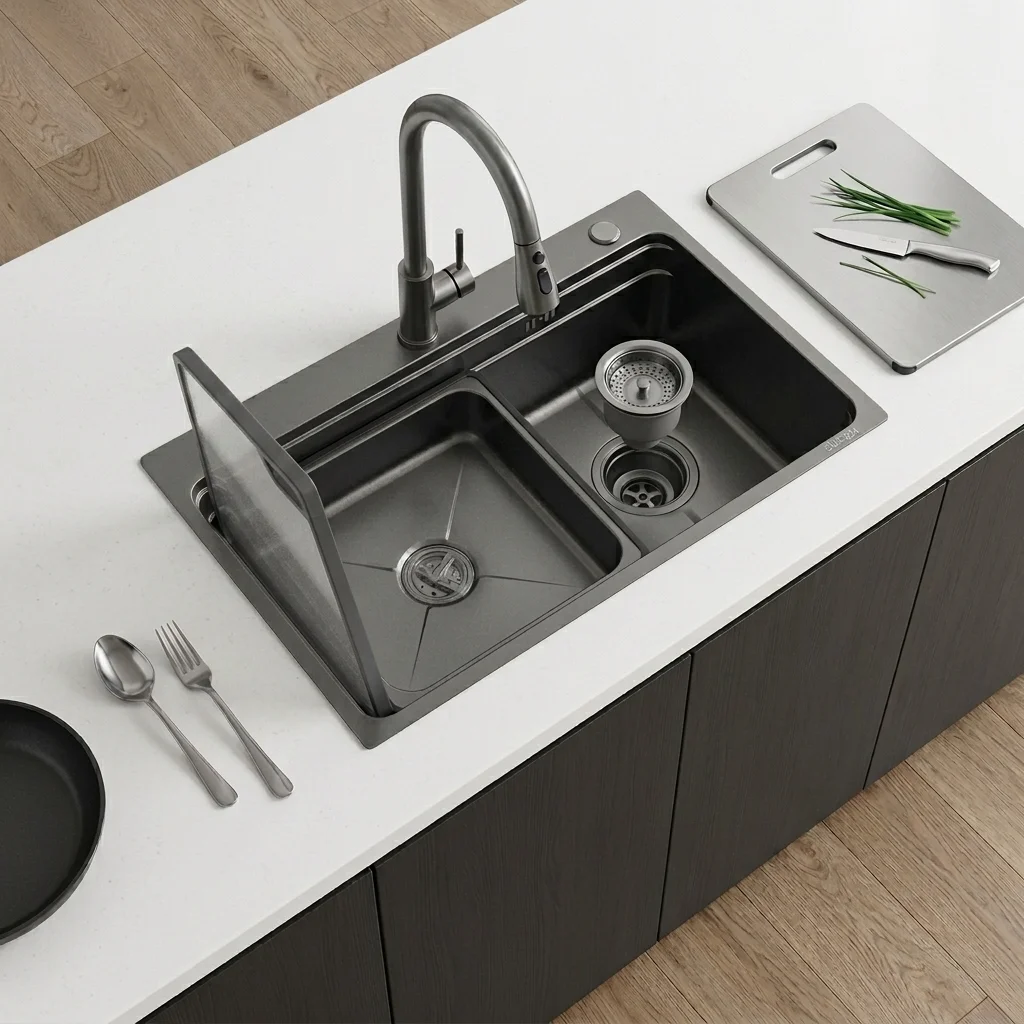
For kitchenware distributors, wholesalers, and private-label brands, product selection involves balancing market preferences with functionality, manufacturing consistency, and purchasing costs. Working with experienced kitchen sink manufacturers can help businesses develop collections suited to different customer groups and project requirements.
In 2026, stainless steel kitchen sinks are seeing continued interest in multifunctional designs, varied surface finishes, flexible basin configurations, and practical performance features. Understanding these developments allows B2B buyers to assess product opportunities and plan inventory according to their target markets.
Workstation Sinks Combine Preparation and Cleaning
Workstation sinks integrate food preparation and cleaning within one area. Built-in ledges can accommodate accessories such as cutting boards, colanders, drying racks, and sliding trays. This arrangement can help users make better use of available counter space, particularly in apartments and kitchens with limited work surfaces.
For distributors, workstation models offer opportunities to supply coordinated sink and accessory packages. However, buyers should evaluate the complete configuration rather than focusing only on the number of accessories. Basin dimensions, component compatibility, drainage placement, and cleaning requirements all affect everyday usability.
Before placing bulk orders, procurement teams should confirm which accessories are included, whether replacement components are available, and whether the design meets common installation requirements. Clear product specifications also help sales teams explain the differences between models and reduce misunderstandings during ordering.
Surface Finishes Expand Kitchen Design Options
Brushed stainless steel remains a familiar option because it complements various countertop materials, cabinet styles, and appliances. Alongside conventional finishes, darker metallic tones and colored surfaces provide additional choices for contemporary kitchen projects. Physical vapor deposition, or PVD, is one process used to create colored metallic finishes. However, coating performance varies according to the materials, treatment process, and manufacturing quality.
A balanced product portfolio can combine standard finishes for broad market coverage with selected premium designs for customers seeking a particular aesthetic. Distributors can introduce new options in controlled quantities and review sales performance before expanding their inventory.
Sample approval is important when purchasing customized products. Buyers should assess color consistency, surface texture, visible imperfections, and protective packaging. They should also establish acceptable quality standards before production begins, particularly when repeat orders need to match products supplied previously.
Basin Configurations Reflect Different Kitchen Requirements
Kitchen layouts and working habits influence sink selection. Deep single-bowl models provide space for large cookware, baking trays, and bulky utensils. Double-bowl designs allow users to separate washing and rinsing activities, which may suit households with different food preparation routines.
Each configuration involves trade-offs. A large basin may require a wider cabinet, while divided bowls can limit the room available for oversized items. Buyers should compare cabinet dimensions, bowl depth, faucet reach, and plumbing connections before confirming a product specification.
Undermount installations and low-profile designs are also relevant to projects seeking a streamlined countertop appearance. These options require accurate cutout measurements and suitable countertop construction. Providing technical drawings and installation templates before ordering can help reduce fitting errors, installation delays, and adjustments on site.
Material Quality and Noise Reduction Remain Relevant
Appearance is only one part of product evaluation. Stainless steel grade, sheet thickness, forming precision, welding quality, and surface treatment all influence a sink’s suitability for its intended application. Procurement teams should request documented material specifications and verify that delivered products match approved samples.
Noise reduction is another consideration, particularly in open-plan residential developments. Sound-dampening pads and underside coatings can help reduce vibration from running water and cookware. Their effectiveness depends on material selection, coverage, and overall sink construction, so sample evaluation is useful when comparing different products.
Businesses sourcing sinks kitchen stainless products should establish inspection criteria covering dimensions, drainage, surface defects, accessory completeness, and packaging. Consistent inspection procedures help purchasing teams identify deviations before products reach distributors or project sites. Clear records also support communication when quality issues require investigation or corrective action.
Supply Chain Planning Influences Purchasing Decisions
Design developments create commercial opportunities when suppliers can deliver products according to agreed schedules. For wholesalers and kitchen brands, material availability, production capacity, lead-time management, and after-sales support affect inventory planning and customer commitments.
AOGLAN describes OEM and ODM services, customized sink development, and multiple sink categories on its official website. These capabilities may be relevant to businesses developing standard collections or products tailored to specific market requirements. Customization can involve dimensions, configurations, and other agreed design details, subject to the supplier’s production capabilities.
Before entering a supply agreement, buyers should verify production capacity, material sourcing arrangements, inspection procedures, and delivery schedules. They should also clarify minimum order quantities, sample approval requirements, packaging standards, and the process for handling defective products. Reviewing these details helps businesses assess whether a supplier can support their purchasing plans and ongoing orders.
Planning a Balanced Product Range for 2026
A measured approach allows distributors to explore new designs without replacing their existing inventory all at once. Businesses can maintain established stainless steel models while testing workstation configurations, alternative finishes, and specialized basin sizes. Sales data, customer feedback, installation issues, and warranty records can then inform future purchasing decisions.
Suppliers offering product development, customization, documented quality controls, and responsive after-sales support can contribute to this process. Businesses considering a manufacturing partnership can review AOGLAN to assess its product range and OEM or ODM services against their sourcing requirements, target customers, and plans for 2026.
