
Selecting a PTC heater supplier can affect more than the purchase price of a heating component. For OEMs, equipment manufacturers, and engineering teams, the supplier can influence customization, product consistency, communication speed, lead times, and long-term production stability. The choice between buying directly from a manufacturer and working through a distributor therefore deserves careful evaluation, particularly when the heater must be integrated into specialized equipment.
Direct Manufacturer or Distributor: What Is the Difference?
A distributor typically purchases products from manufacturers and resells them to customers. This model can be convenient when buyers need standard products, small quantities, or access to several brands through one purchasing channel.
A direct manufacturer operates closer to the production process. Buyers can usually communicate specifications, drawings, technical requirements, and application conditions directly with the engineering or production team. This can be particularly useful when a PTC heater must match specific voltage, wattage, dimensions, mounting arrangements, or equipment constraints.
The better option depends on the project. Standard replacement components may require little technical interaction, while an OEM development project can benefit considerably from direct communication with the producer.
Why Customization Matters for OEM Heating Projects
PTC heating technology is used across a broad range of equipment, including HVAC systems, industrial equipment, transportation applications, home appliances, agriculture, and consumer products. A supplier therefore needs to understand more than the required heating power.
For an OEM buyer, dimensions and installation conditions can be just as important as wattage. A heater that delivers the required output but cannot fit the available space may require costly mechanical redesign.
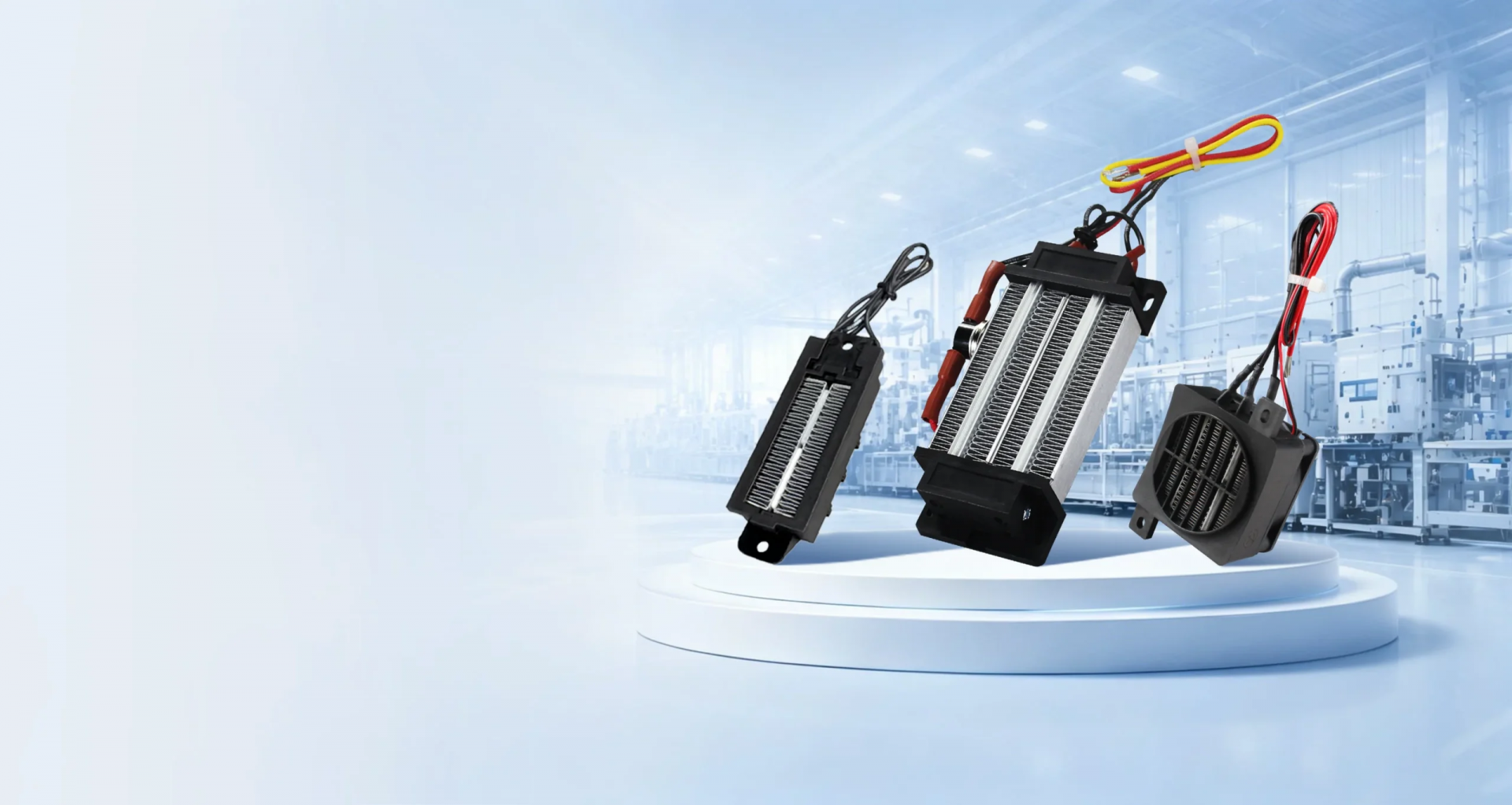
A direct manufacturer can potentially address these requirements during product development. As a PTC heater solutions provider, the current PTCYIDU product range, for example, includes conductive and insulated PTC air heaters, fan heaters, aluminum shell heaters, flexible polyimide film heaters, and other heater configurations.
This broader configuration capability can make direct sourcing more suitable when the heating component is being developed as part of a larger machine or appliance rather than purchased as an interchangeable spare part.
Evaluate Technical Support, Not Just Unit Price
A low quoted price does not necessarily represent the lowest total procurement cost. Engineering revisions, communication delays, inconsistent specifications, and additional testing can create hidden expenses during product development.
Buyers should therefore assess whether the supplier can review drawings, confirm technical requirements, provide samples, and support testing before mass production. A distributor may be able to answer commercial questions quickly, but technical questions may need to pass through another organization before reaching the actual producer.
Direct manufacturer communication can reduce this distance. For customized PTC heater projects, the ability to discuss voltage, wattage, dimensions, mounting, and application requirements with technical personnel can help prevent misunderstandings before production begins.
Consider Production Control and Quality Consistency
PTC heaters rely on temperature-dependent electrical characteristics to regulate heating output. The supplier’s manufacturing and testing processes therefore matter when consistent performance is required across production batches.
A serious industrial supplier should be able to explain how components are screened, assembled, tested, and inspected. PTCYIDU’s published manufacturing process includes PTC screening and pairing, wire processing, assembly, compression molding, surface temperature testing, electrical performance testing, and final stamping and packaging.
This type of production visibility can be valuable for business buyers because quality decisions are connected directly with the manufacturing process. It also gives procurement and engineering teams clearer information when evaluating whether a supplier is suitable for recurring orders.
Compare Lead Times and Sampling Requirements
Lead time becomes especially important when a PTC heater is part of a new product launch. Waiting weeks for technical clarification or samples can delay prototype testing and subsequent production decisions.
Manufacturers that maintain an established development workflow may offer a clearer path from specification confirmation to sampling and mass production. PTCYIDU states that its custom process covers inquiry, design and quotation, order confirmation, sample production, mass production, quality control, and shipping. Its website lists sample production at 3–7 days, while mass production is stated as 15–20 days depending on quantity and specifications.
Such information should still be confirmed against the actual project because production schedules can vary with design complexity, quantity, and material requirements.
When a Distributor May Still Make Sense
Direct sourcing is not automatically the right answer for every buyer. Distributors can remain practical when a company needs established standard products, consolidated purchasing, local inventory, or a supplier relationship that simplifies routine procurement.
For replacement parts, maintenance orders, or low-volume requirements, the distributor’s logistics network may provide greater convenience than establishing a direct manufacturing relationship.
The key is to match the sourcing model with the project’s technical demands. Buyers should compare not only the unit quotation but also customization support, communication, minimum order requirements, sampling, quality control, delivery, and after-sales service.
Making the Final Supplier Decision
A suitable PTC heater solutions provider should be evaluated as a long-term technical and commercial partner rather than simply as a source of individual components. Procurement teams can begin by defining the application, operating environment, required voltage and power, installation space, expected quantities, and customization needs.
They can then ask potential suppliers for technical documentation, sample arrangements, production timelines, and quality information. For customized equipment, direct access to manufacturing and engineering resources can provide a meaningful advantage.
For buyers seeking this model, PTCYIDU presents itself as a direct PTC heater manufacturer based in Shanghai, China. The company states that Shanghai Yidu Electronics was founded in 2002 and develops and manufactures PTC heating elements, air heaters, aluminum shell heaters, flexible film heaters, and fan heater modules for OEM customers. Its published information also highlights custom voltage, wattage, dimensions, and mounting configurations.
For business buyers, the decision between a manufacturer and distributor should ultimately reflect the project’s complexity. When customization, engineering communication, production control, and long-term supply consistency are priorities, working directly with a manufacturer can offer advantages that extend well beyond the initial quotation.
