
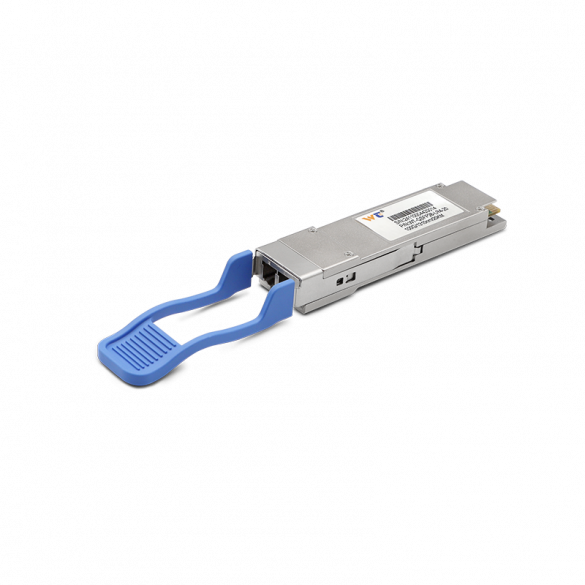
Modern enterprise and industrial data networks rely heavily on electro-optical conversion mechanisms to achieve high-throughput data transmission. Inside an optical transceiver module, light-emitting transmitters convert digital electronic signals into light pulses, which propagate across optical fiber cables before reaching a photodetector that reverses the operation. By bridging the gap between networking hardware and fiber media, these hot-swappable components maintain signal integrity across localized racks and continent-spanning links.
Digital communication infrastructure utilizes these small form-factor devices across varied network topologies. Ethernet switches, routers, and specialized industrial appliances depend on modular optical hardware to adapt to shifting bandwidth requirements. Rather than replacing entire circuit boards or chassis, network engineers swap modular hardware components to scale port speeds from legacy megabit links to multi-gigabit connections.
Technical Architecture of Optical Transceivers
The internal structure of an optical module consists of a Transmitter Optical Sub-Assembly (TOSA), a Receiver Optical Sub-Assembly (ROSA), and associated printed circuit board circuitry. The TOSA utilizes specialized semiconductor lasers, such as Vertical-Cavity Surface-Emitting Lasers (VCSEL) for short distances or Distributed Feedback (DFB) lasers for long distances, to convert electrical inputs into light. Meanwhile, the ROSA houses avalanche photodiodes or PIN photodiodes designed to detect incoming optical signals and re-translate them into digital electrical streams.
Complementing the electro-optical sub-assemblies is the Printed Circuit Board Assembly (PCBA), which contains drive circuits, signal conditioning amplifiers, and a microcontroller unit. Digital Diagnostic Monitoring (DDM) interfaces communicate operational telemetry—such as operating temperature, supply voltage, laser bias current, and optical power levels—to the host system. This real-time visibility enables network managers to monitor link stability and address thermal or signal degradations proactively.
Form Factor Classifications Across Bandwidth Tiers
Physical form factors have evolved significantly alongside increasing demands for rack density and port speed. The Small Form-factor Pluggable (SFP) format established the standard for 1.25 Gbps Gigabit Ethernet connectivity. As network requirements scaled to 10 Gbps, SFP+ emerged within identical physical dimensions, offering enhanced high-speed signal integrity while maintaining backward compatibility with standard optical interfaces.
For higher bandwidth deployments, Quad Small Form-factor Pluggable (QSFP) designs offer increased density by bundling four independent communication channels within a single housing. QSFP+ supports 40 Gbps aggregate throughput, whereas QSFP28 accommodates 100 Gbps speeds by delivering 25 Gbps per lane. Higher-speed standards like QSFP-DD further expand capacities for modern data center backbones without altering basic rack spatial parameters.
Fiber Modes and Transmission Range Considerations
Selecting appropriate fiber cabling modes depends on link distance and architectural requirements. Multimode Fiber (MMF), utilizing core diameters of 50 or 62.5 microns, operates primarily at 850 nm wavelengths. Because light rays reflect along multiple paths inside wider cores, optical dispersion limits multimode links to shorter distances, typically ranging from 100 meters to 400 meters depending on cable grading.
Single-mode Fiber (SMF) features a narrow core around 9 microns that forces light through a single propagation path. Operating at 1310 nm or 1550 nm wavelengths, single-mode optics minimize modal dispersion and achieve long-reach transmission across distances ranging from 10 kilometers to well over 80 kilometers. Enterprise networks balance these media choices by deploying multimode connections for intra-rack patching and single-mode links for campus backbones.
Optical Wavelengths and Multiplexing Technologies
Standard optical transceivers operate across specific optical spectrum windows defined by low fiber attenuation characteristics. The 850 nm wavelength serves short-range multimode applications, whereas 1310 nm provides optimal performance for medium-range single-mode transmissions due to low chromatic dispersion. For long-haul links, 1550 nm wavelengths capitalize on minimal optical loss within silica glass fiber.
Wavelength Division Multiplexing (WDM) maximizes existing fiber investments by combining multiple optical signals onto a single fiber core using distinct light frequencies. Coarse WDM (CWDM) uses wide channel spacing across 18 distinct wavelengths to offer cost-effective capacity expansion. Dense WDM (DWDM) utilizes narrower channel spacing within the C-band, allowing dozens of high-speed channels to run simultaneously over single long-distance fiber pairs.
Compatibility and Multi-Source Agreements
Standardization in the optical communications industry relies heavily on Multi-Source Agreements (MSAs). MSAs are collaborative industry standards that define physical dimensions, pin configurations, electrical interfaces, and optical characteristics for transceiver designs. These open standards help prevent vendor lock-in, enabling network operators to source modular components from multiple manufacturing partners while maintaining hardware compatibility.
Host equipment vendors often implement Electrically Erasable Programmable Read-Only Memory (EEPROM) coding checks that read firmware stored within pluggable optics. Compatible vendor modules feature specialized firmware programmed to pass host switch authentication checks. Optical transceivers fabricated under stringent quality assurance protocols deliver native plug-and-play compatibility with mainstream router and switch hardware. A verified unit like WINTOP hardware fulfills these compatibility criteria across varied enterprise network environments.
Testing Standards and Reliability Measures
Evaluating optical module performance involves specialized testing protocols to confirm signal quality and structural integrity. Bit Error Rate (BER) testers assess data transmission accuracy under maximum load, verifying that signal degradation remains below acceptable thresholds. Optical Time-Domain Reflectometers (OTDR) and optical spectrum analyzers measure optical power output, wavelength accuracy, and extinction ratios across operating conditions.
Long-term reliability requires rigorous stress testing before field deployment. Factory quality assurance routines subject modules to thermal cycling, burn-in procedures, electrostatic discharge assessments, and mechanical shock testing. Validating these parameters helps prevent premature component failures in high-availability network infrastructures.
Deployment Practices and Operational Maintenance
Proper handling during installation protects delicate optical interfaces from physical damage and contamination. Microscopic dust particles on fiber end-faces cause attenuation, back-reflection, and permanent optical surface scratching. Technicians inspect connectors with fiber scopes and clean optical faces using lint-free wipes or dedicated optical cleaning pens prior to insertion.
Monitoring telemetry during operation provides actionable insights into overall network health. Tracking transceiver DDM parameters allows engineers to detect optic degradation, such as dropping receiver sensitivity or rising operating temperatures, before link failure occurs. Maintaining clean physical connections and monitoring operating metrics supports continuous network uptime. Modular options like WINTOP WT-SFP+-SR or WT-QSFP28-LR4 optics give administrators reliable choices for structured deployment plans.
Conclusion
Understanding optical transceiver mechanics, form factors, wavelengths, and operational parameters helps organizations design stable network infrastructures. Matching transceiver specifications with specific environmental and throughput needs verifies long-term link performance across commercial and industrial network backbones.
Shenzhen WINTOP Optical Technology Co., Ltd., founded in 2004, is a national high-tech enterprise with 21 years of experience in optical communication R&D and manufacturing. Holding over 60 core patents and operating a 10000 ㎡ production facility, WINTOP supplies industrial switches, PoE devices, and industrial-grade optical transceiver module solutions to partners across 40 countries. Contact technical support teams to explore customized optical networking hardware for upcoming system integration requirements.
